5 hr
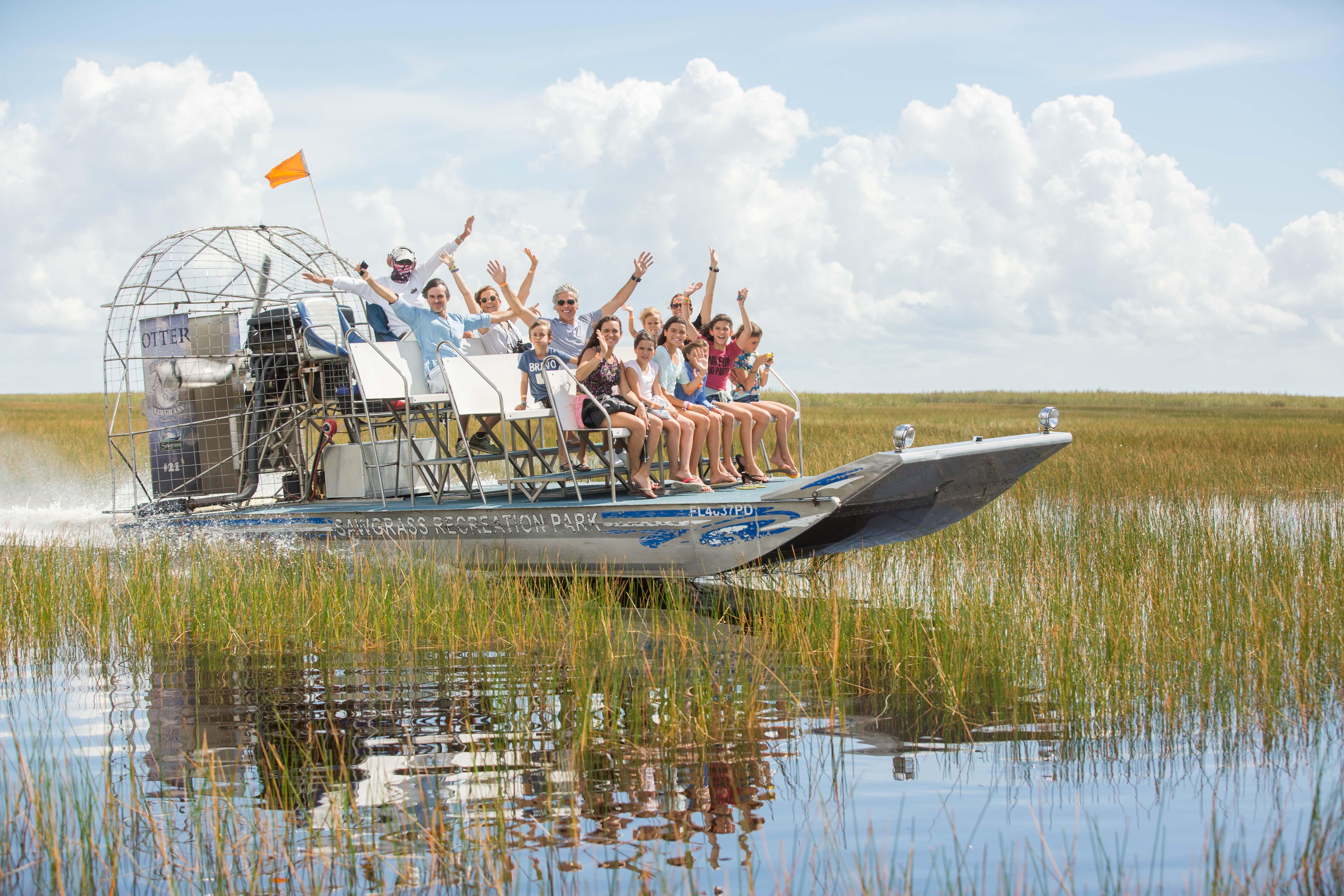
Everglades Airboat Safari & Wildlife Exhibit from Miami
- Entry ticket
- Mobile voucher
- Valid same day
- Free cancellation
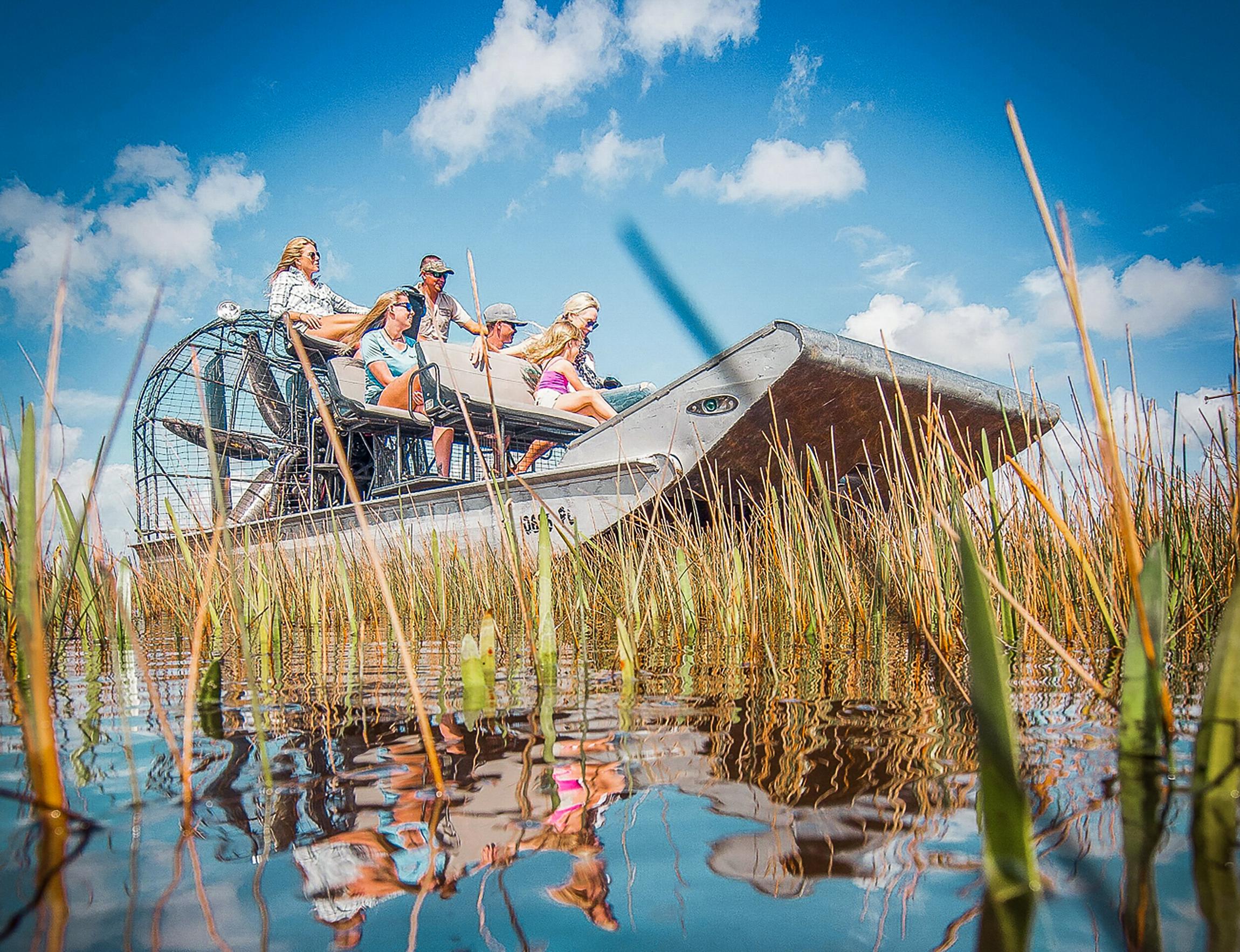
Everglades Miami — Shark Valley Entry & Guided Loop Tours
Sawgrass wide as an ocean, alligators sunning in silence.
Compare fares, pick the fit — all bookings are mobile-voucher and eligible for free cancellation where shown.
5 hr
1 hr
2 hr
At Shark Valley in everglades miami, the main choice isn't a ticket tier at all, it's an access mode: guided tram, self-guided bike, or walking the 15-mile loop on foot.
|
Top pick Tram Tour (Guided, seated) |
Bike Rental (Self-guided) | Walking (Unguided, on foot) | |
|---|---|---|---|
| How you move | Open-air tram, seated, guide narrates | Single-gear rental bike, ride yourself | On foot along the paved loop road |
| Shade/comfort | Roof canopy, one side often full sun | No cover, exposed the whole loop | No cover, slowest sun exposure |
| Pace and flexibility | Fixed 2-hour narrated schedule | Self-paced, 2–3 hours typical | Self-paced, open-ended, no time limit |
| Typical cost structure | Adult tram fare plus park entrance | Bike rental fee plus park entrance | Park entrance fee only, no rental cost |
| Best for | First-timers wanting narration and gators | Active visitors wanting closer wildlife views | Budget visitors or short partial-loop walks |
| Physical effort | None, seated the entire tour | Moderate, flat paved 15-mile ride | High if attempting the full 15-mile loop |
| See tickets & prices |
Verdict: Most everglades miami tours favor the tram for first-timers who want narration without effort, while fitter visitors often choose bike rentals over a full walking loop for a closer, self-guided ride through Shark Valley.
Worth it for groups and wildlife lovers
A trip to the everglades miami side runs $35 per vehicle for a 7-day pass, plus a $100 nonresident fee per adult. That math rewards carloads: split four ways, the value climbs fast, while a solo nonresident pays a steep premium. For that fee you get Shark Valley tower access, a 15-mile paved loop dense with alligators, wading birds, and turtles, plus your choice of tram or bike to cover it. The wildlife density here beats most Florida sawgrass preserves, and few urban-adjacent parks let you stand feet from basking gators. These everglades miami tours pay off best for families, photographers, and anyone chasing the observation tower panorama over the river of grass. Solo travelers watching costs, or visitors expecting a quick photo stop, will feel the price more sharply against their limited time.
Bottom line: Split among a carload for wildlife and tower views, everglades miami tickets earn their price; go solo on a tight budget and they don't.
Both sit inside Everglades National Park, but they suit different visitors: pick Shark Valley for a longer tram or bike loop with a lookout tower, and Anhinga Trail for a quick, gator-dense boardwalk near Homestead.
|
Top pick Shark Valley |
Anhinga Trail | |
|---|---|---|
| Distance from Miami | ~25 miles (40–50 min) | ~40–50 miles (1–1.25 hrs) |
| How you get around | Tram, bike, or walk on 15-mile loop | Paved path + boardwalk, 0.8 miles |
| Wildlife density | High along canal, spread over loop | Very high, gators close to path |
| Walking effort | Easy to moderate, longer distance | Easy, flat, under 1 mile |
| Crowd levels | Lower, especially on bikes | Busiest trail in the park |
| Best for | Longer visits, biking, tower views | Quick stop, guaranteed gator sightings |
| See tickets & prices |
Verdict: Shark Valley rewards visitors with more time who want distance and a tower view, while Anhinga Trail wins for anyone who wants maximum wildlife in minimum time — many everglades miami tours combine both when the schedule allows.
Hand-picked experiences loved by thousands of travelers
4.5 – 5 hours
Free Cancellation
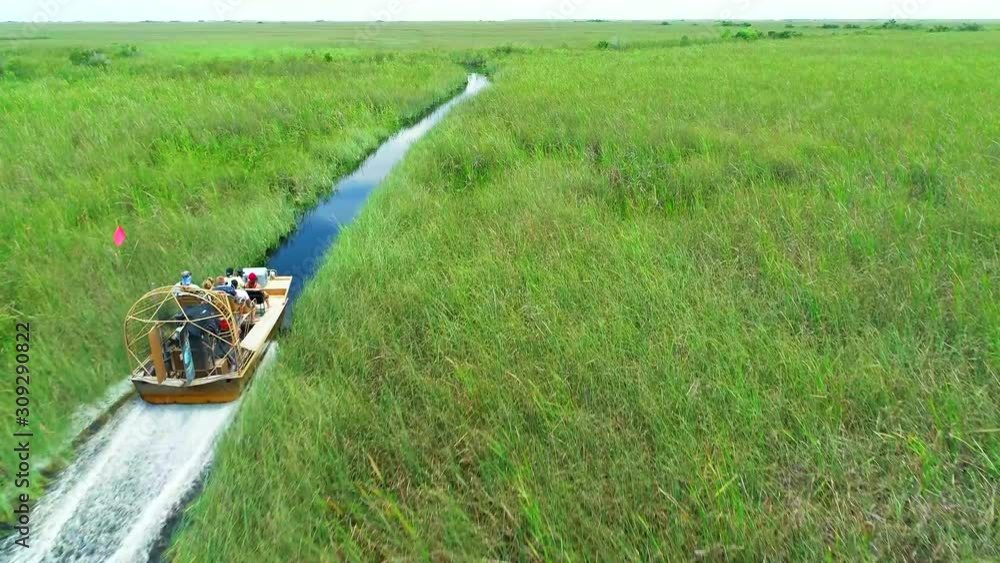
Discover the true Everglades on a premium, intimate airboat tour from Miami with exclusive access to secluded tree islands.
5 hours
Free Cancellation
Discover Miami’s wild side, luxurious mansions, and vibrant neighborhoods with this flexible three-part adventure bundle.
5 hours
Free Cancellation
Escape the city for a half-day adventure in the UNESCO-protected Everglades, featuring high-speed airboating and expert-led wildlife shows.
Check in at the gate with a valid park pass, park in the visitor center lot, and pick up a trail map.
Decide between the 2-hour narrated tram tour, a rented bicycle, or walking a portion of the loop on foot.
Travel the 7-mile West Road section watching for alligators along the canal edge and wading birds in the marsh.
Climb the spiral ramp partway around the loop to the 65-foot tower for panoramic sawgrass views.
Complete the loop on the 8-mile East Road segment back toward the visitor center.
Add the short Bobcat Boardwalk or Otter Cave Hammock Trail near the visitor center for closer wildlife views.
A 65-foot concrete tower reached by a gently spiraling ramp rather than stairs, marking the halfway point of the 15-mile loop. From its platform, views extend up to 20 miles across the sawgrass marsh, and alligators are frequently visible sunning directly below the ramp.
A flat, paved 15-mile loop split into a 7-mile West Road and 8-mile East Road, used simultaneously by trams, cyclists, and walkers. The route follows a borrow canal where alligators, herons, and turtles gather within a few feet of the pavement.
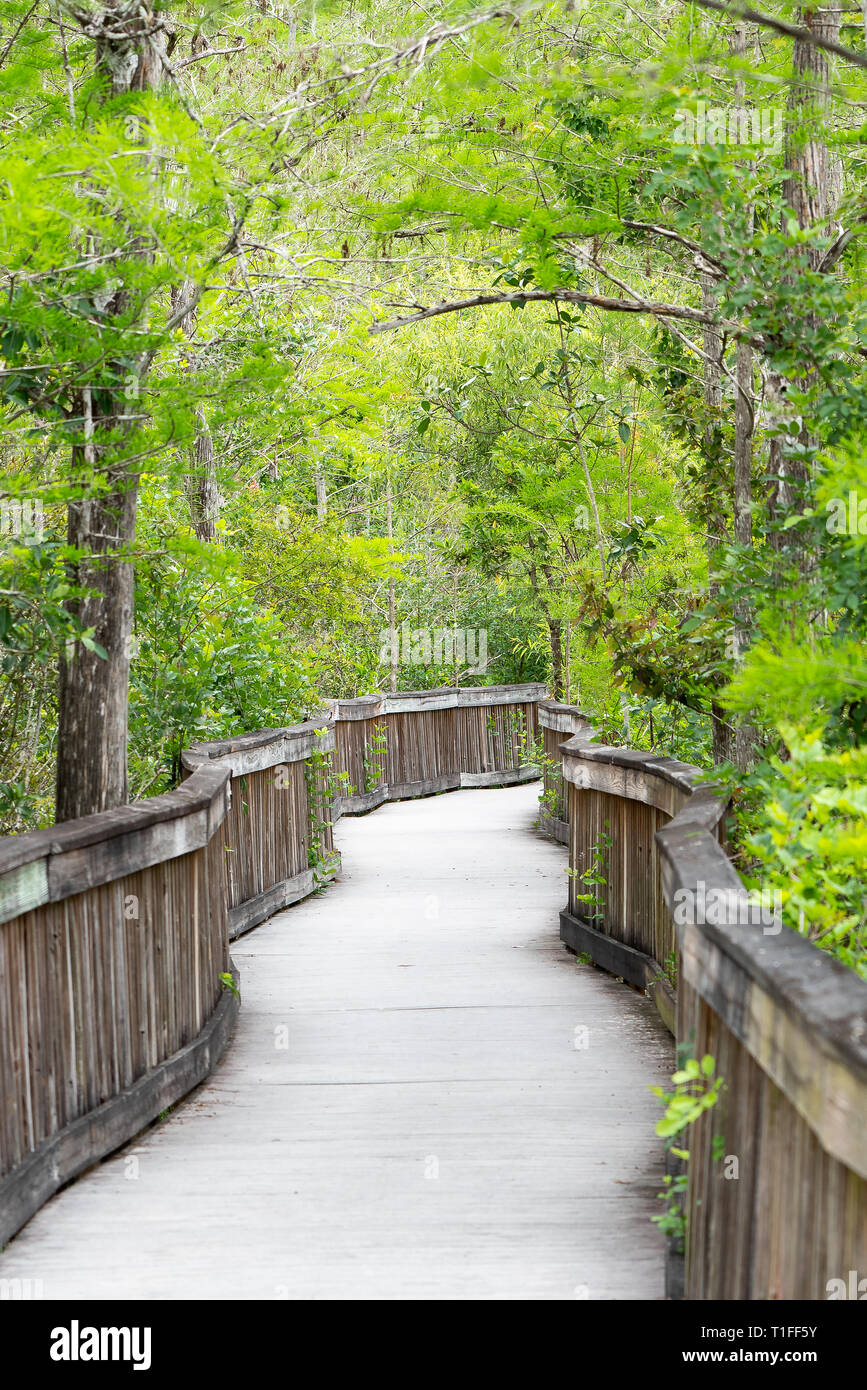
A half-mile self-guided boardwalk just behind the visitor center that crosses sawgrass slough into tropical hardwood forest. It's a favored winter and spring stop for spotting migratory and nesting birds without leaving the pavement.
A quarter-mile limestone loop through a hardwood hammock, notable for water-filled solution holes formed by erosion in the bedrock, sometimes described as a Swiss-cheese network underfoot. Small footbridges cross the stream sections, and despite the name, otters are rarely seen.
The gateway building where trams depart and rangers staff educational exhibits on Everglades ecology and history, alongside restrooms and a vending machine. It sits at the trailhead of the full loop and both shorter walking trails.
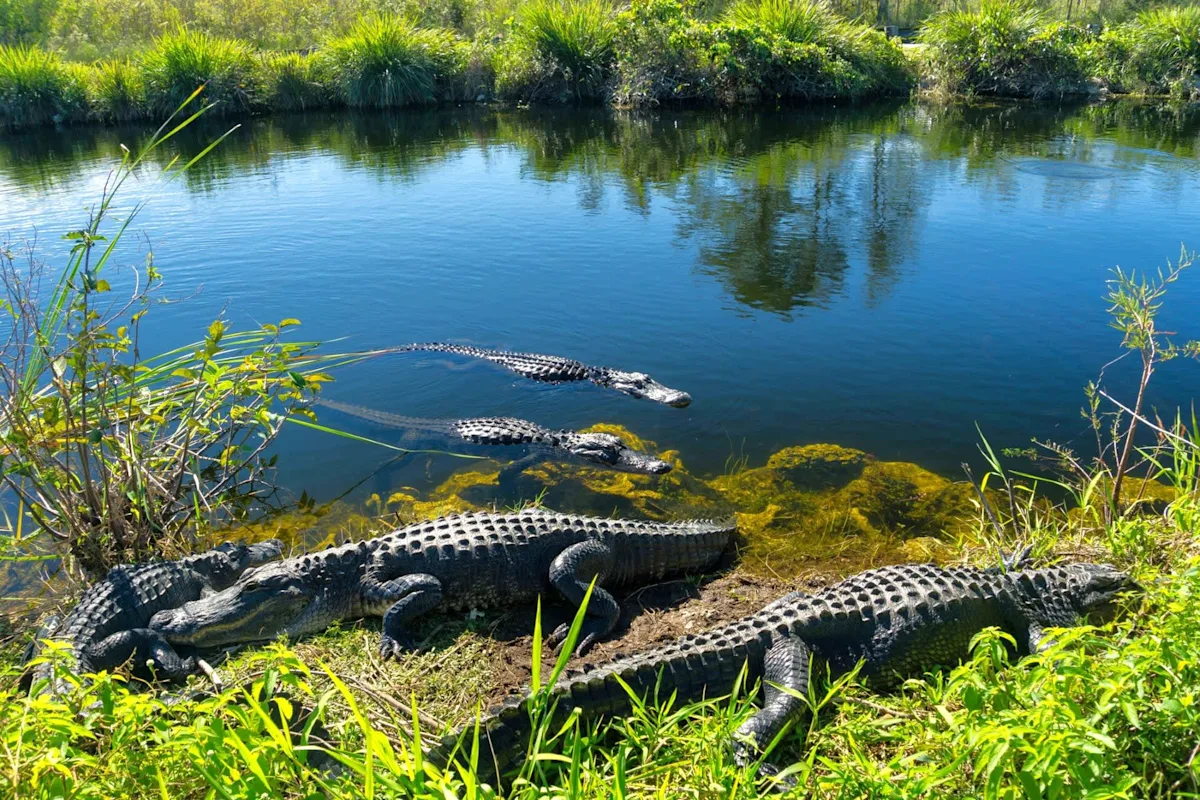
The borrow canal paralleling the West Road section of the loop, considered one of the most reliable stretches in the park for close-up alligator sightings. Wading birds including roseate spoonbills and great egrets also gather along its banks.
You arrive at the Shark Valley Visitor Center between 08:30 and 10:30, when the air is still cool and the alligators have not yet retreated from the trail edges. You leave the car — the pass covers seven days — and the sawgrass opens flat in every direction, humming with insects. You start down the fifteen-mile loop and the wildlife announces itself within minutes. An alligator lies motionless across the warm asphalt; you give it wide berth. Anhingas dry their black wings on the railings, and a purple gallinule steps across lily pads on impossibly long toes. You pause at a borrow-pit pond where a dozen reptiles float like waterlogged driftwood, eyes just breaking the surface. Seven miles in, the observation tower rises. You walk the spiraling ramp to the top of everglades miami's only high vantage, and the plain resolves into a single sheet of moving water flecked with tree islands. Wood storks wheel below. You trace the horizon and see no building, no road but the one you came in on. You descend and continue the loop, the sun climbing now, heat pressing down. A soft-shell turtle noses through duckweed. By the time you close the circle back at the center, you have crossed a working wilderness on foot, close enough to hear it breathe.
All the details about your upcoming adventure in one place
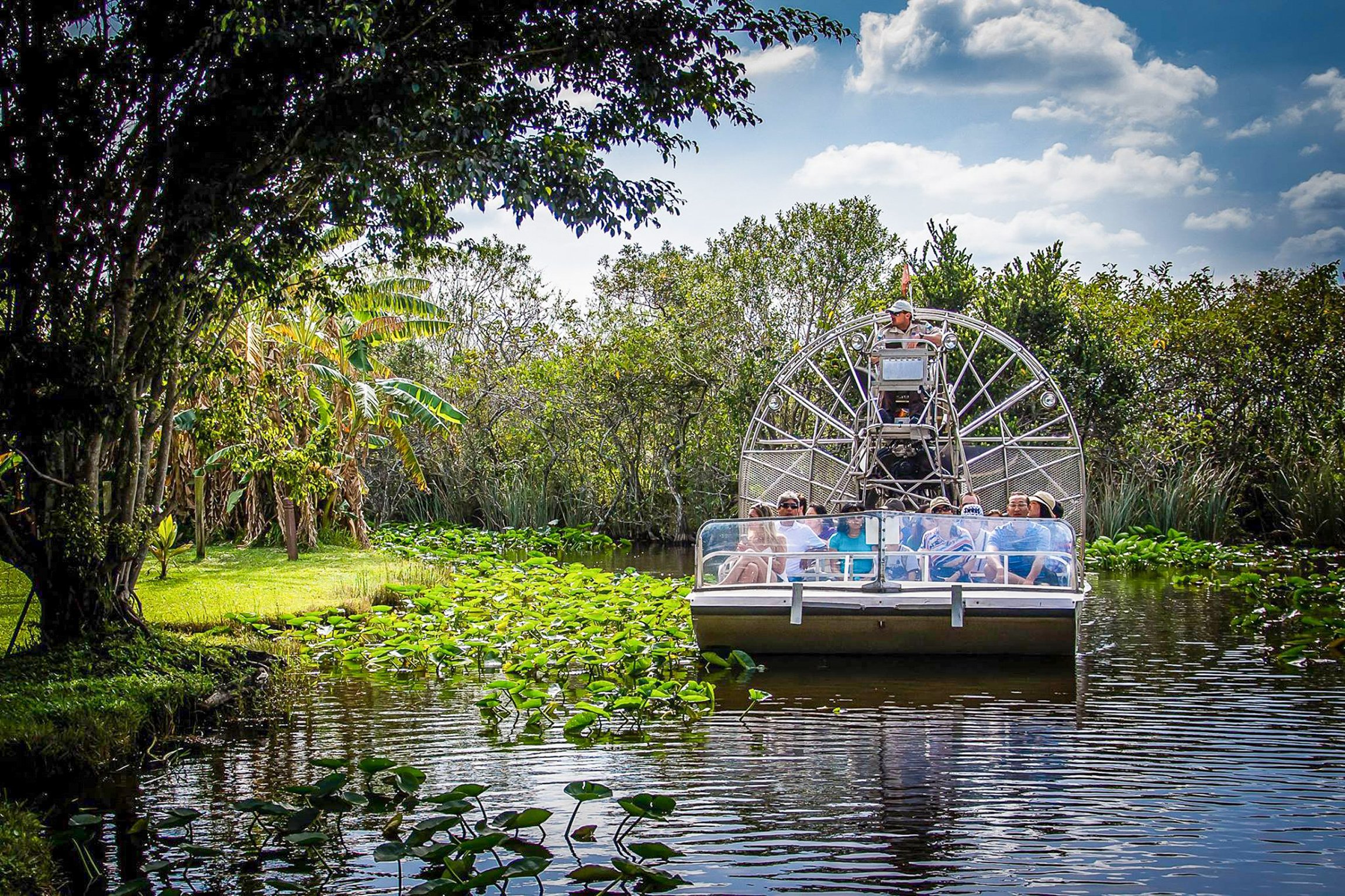
Just west of the city, everglades miami opens onto a vast subtropical wilderness of sawgrass prairies, mangrove channels, and slow-moving freshwater sloughs unlike anywhere else in North America. Airboat rides glide across the River of Grass while naturalist guides point out alligators, wading birds, and the rare Florida panther habitat that defines this national park. Everglades miami tours suit first-time visitors and returning wildlife enthusiasts alike.
The freshwater sheet that defines the everglades miami region moves at roughly one hundred feet per day — a river eighty kilometres wide and only inches deep, so slow it was long mistaken for stagnant swamp. Marjory Stoneman Douglas corrected that error in 1947 with the phrase "River of Grass," and the wetland ceased to be a nuisance to be drained and became a system to be understood. That same year, Everglades National Park was formally dedicated, the first American park protected for its living ecology rather than its scenery. Shark Valley, at the northern edge along the Tamiami Trail, opened its loop road decades later on the bed of an old oil-exploration route cut in the 1940s. The Miccosukee and Seminole peoples had read this landscape for centuries before any survey line, poling dugout canoes through the sawgrass and building thatched chickees on tree islands the maps still call hammocks. What makes this corner of the miami everglades matter today is scale and fragility held in one frame. The park spans roughly 1.5 million acres and carries a triple designation — UNESCO World Heritage Site, International Biosphere Reserve, and Wetland of International Importance — a distinction shared by almost nowhere else on the continent. It is the only place where American alligators and American crocodiles share territory, and where the Florida panther, fewer than two hundred remaining, still hunts. Architecturally, Shark Valley resists monument. Its defining structure is a 65-foot observation tower, a spiraling concrete ramp raised in 1966 to lift visitors above the sawgrass plain that otherwise offers no vantage. From its rim the wetland reads as a single unbroken sheet, broken only by tree islands and the dark shapes of wading birds — roseate spoonbills, wood storks, great blue herons stalking the shallows. A fifteen-mile paved loop threads the terrain, curving past borrow-pit ponds where alligators congregate in the dry season. The ecosystem is one of subtraction. Drainage canals dug for agriculture through the twentieth century halved the historic wetland and severed its flow, and the everglades miami watershed now depends on one of the largest restoration efforts ever attempted, a multi-decade federal and state undertaking to re-plumb the water south toward Florida Bay. Everything visible from the tower — the sheet flow, the hardwood hammocks, the alligator holes that hold water through drought — persists inside that ongoing repair. To stand here is to look at a landscape both ancient and provisional, a subtropical wilderness kept alive by engineering as deliberate as the canals that once threatened it.
A river eighty kilometres wide and only inches deep, so slow it was long mistaken for stagnant swamp.
There is no formal dress code, but breathable, light-colored clothing, closed-toe shoes, and a wide-brimmed hat are recommended given the exposed, shade-free Tram Road. Layers are useful in winter mornings when temperatures can start cool before climbing quickly by midday.
There are no bag scanners or metal detectors at the Shark Valley entrance gate; rangers simply check for a valid park pass at the vehicle checkpoint. Keep bags zipped and food sealed, since raccoons and other wildlife around the visitor center parking area are accustomed to scavenging from open vehicles and packs.
Personal photography and non-commercial video are permitted throughout the Shark Valley area, including from the observation tower and aboard the open-air trams. Tripods are allowed on the paved loop but should not block the tram lane or bike traffic, and drones are prohibited without a special use permit under National Park Service rules.
Children generally handle the paved loop and the short spiral ramp up the observation tower without difficulty, and rangers keep tram narration engaging for younger visitors. Restrooms and a vending machine are available at the visitor center, with additional restrooms near the tower roughly midway around the loop.
The Shark Valley Visitor Center, the paved 15-mile loop, and the spiral ramp to the mid-level viewing area of the observation tower are wheelchair accessible. The uppermost stairs of the tower are not accessible, but the ramp itself reaches a broad viewing platform with panoramic sightlines over the sawgrass marsh.
The visitor center has a beverage vending machine and a few picnic tables in the parking area, but there is no restaurant or café on site. Bring your own water and snacks, since there is no shade or refreshment stop along the 15-mile loop between the visitor center and the observation tower.
Quiet on weekday mornings
Ranger talks more frequent midweek
Weekend crowds begin building
Parking fills fastest this day
Hours
Daily 08:30–18:00, gate closes to vehicles at 6 PM
Address
Shark Valley Visitor Center, 36000 SW 8th St, Miami, FL 33194
Access
Paved 15-mile loop and observation tower ramp are wheelchair accessible
Climate
Hot, humid, little shade along the Tram Road — sun protection essential
Entry
$35 per vehicle (7-day pass) plus a $100 nonresident fee per adult
Layout
Loop road split into 7-mile West Road and 8-mile East Road around a central tower
Car
Drive west from downtown Miami on the Tamiami Trail (US-41) for roughly 45 minutes to the Shark Valley entrance on the south side of the road. Free parking is available in the visitor center lot, though it fills by mid-morning on dry-season weekends.
Public transport
Miami-Dade Transit's Route 8 or regional connections can reach the general Tamiami Trail corridor, but service to Shark Valley itself is limited and infrequent. Most visitors without a car arrange a rideshare or guided tour pickup from Miami instead.
Taxi
A taxi or rideshare from downtown Miami takes about 45-50 minutes each way along US-41. Confirm return pickup in advance, since rideshare availability directly at Shark Valley can be sparse outside peak hours.
Bike
Cyclists sometimes ride sections of the Tamiami Trail shoulder to reach Shark Valley from nearby areas, though most bring bikes by car and rent from the on-site concession for the loop itself. Bike rentals are available at the visitor center for use on the paved 15-mile loop.
The $35 per-vehicle entrance pass is valid for 7 consecutive days at any Everglades National Park entrance and is non-refundable once purchased. Concession-run tram tours and bike rentals booked separately typically allow free cancellation up to 24 hours ahead, with same-day cancellations forfeiting the fee.
Recommended time
2-3 hours
Budget roughly two hours if you take the tram tour around the 15-mile loop, or two to three hours on a bike since you set your own pace and stop more for wildlife. Arriving in the 08:30-10:30 window matters for more than comfort: it beats the heat and lets you slip in before the crowd crunch that builds by mid-morning. Tram reservations for the everglades miami loop can sell out days ahead in busy stretches, and even with a booking, the parking lot itself turns into a one-car-out-one-car-in bottleneck once demand peaks. If you're relying on a walk-up spot rather than booked everglades miami tickets, add 30-45 minutes of buffer for ticket pickup and parking, since arriving right at your tour time is not enough.
Crowd levels through the day
Weather · crowds · average price — dots go green to amber to red as each metric rises.
Dry season with temperatures in the 60s-70s°F and the most active wildlife viewing, including large alligator concentrations along the canal. This is the busiest period, so early arrival helps beat both heat and parking congestion.
Water levels begin dropping, concentrating wading birds and alligators near remaining pools before the wet season begins. Temperatures climb into the 80s, and spring break weeks bring heavier crowds.
Wet season brings daily highs near 90°F, high humidity, and frequent afternoon thunderstorms, with mosquitoes at their peak. Wildlife disperses across the flooded marsh, making sightings less concentrated than in the dry season.
Rains taper off gradually and temperatures start easing by late October, though humidity and mosquito activity remain elevated into early fall. Crowds are lighter than winter, making this a reasonable shoulder-season option.
Wear light, breathable clothing and start with plenty of water, since there is no shade along the 15-mile loop road.
On dry-season weekends the visitor center lot can fill by mid-morning, so have a backup plan like roadside parking along the Tamiami Trail with a short walk in.
Bike rentals and tram tours at Shark Valley are run by a concessioner separate from the entrance fee, so budget for that expense separately.
The Otter Cave Hammock Trail can flood during the wet season, so ask rangers at the visitor center about current conditions before setting out.
Mosquitoes are most persistent from late spring through fall, particularly near the canal edges and hardwood hammocks.
The borrow canal paralleling the West Road is one of the most reliable spots in the park to see alligators baski
36000 SW 8th St, Miami, FL 33194
Main entrance gate, parking, tram tour departure point
Get directionsMid-loop, accessed via West Road
Tram stop and turnaround point for many walkers and cyclists
Get directionsThe 45-foot spiral ramp leads to a circular deck with 360-degree views over the sawgrass prairie; shoot straight down for gators in the borrow pit below, and out toward the horizon for the classic River of Grass panorama. Stand on the west-facing rail for the widest open sightline.
The first mile of the paved loop road running alongside the western canal is where alligators bask closest to the path, often just a few feet from the edge, making it the easiest spot on an everglades miami visit for close wildlife frames without a zoom lens. Keep the required distance and shoot low for eye-level gator shots.
A short loop at the tower's base cuts through tropical hardwood hammock and skirts a shaded pond, giving a tighter, greener frame than the open prairie shots elsewhere on the loop. Good for reflections and wading birds working the pond edge.
A well-known gator hole sits right beside the Shark Valley Visitor Center parking area, often holding a resting alligator within easy view of the boardwalk rail. It's the first and most convenient shot on any everglades miami tour, no walking required.
Standing at ground level just beneath the tower, the sawgrass stretches flat to the tree line in every direction, a useful low-angle contrast shot to pair with the panorama taken from the deck above.
A day at everglades miami's Shark Valley works well with kids once you match the activity to their stamina, since the 15-mile loop is flat and paved but fully exposed to sun. Families booking an everglades miami tour on the tram tend to have an easier time than those attempting the full bike loop with young children.
The open-air tram suits almost any age, including toddlers, since it's covered and the two-hour loop requires no physical effort from kids
A shorter tram tour is the realistic choice for families with children under 8 or anyone unused to Florida heat, while a full bike loop with young kids can stretch past three hours in direct sun.
The observation tower sits roughly halfway around the loop and is reached via a gently spiraling ramp rather than stairs, which most children handle easily, though the metal surface gets hot underfoot by midday.
There is no shade anywhere on the paved trail, so hats, sunscreen, and water are non-negotiable for kids biking or walking the loop; the tram's roof offers the only real relief from direct sun.
If a downpour hits, the visitor center offers covered exhibits on Everglades ecology while families wait it out, and tram tours generally continue to run since the vehicles are roofed.
Real experiences from real travelers
We booked the earliest slot and the everglades miami morning air was cool and glassy before the heat set in. Our captain cut the engine in the middle of the sawgrass and we just sat listening to birds and frogs. Saw four alligators and a whole rookery of wading birds without even trying
Photos never prepared me for the sheer flatness and scale of this wetland stretching to the horizon. The airboat portion of our everglades miami tour was fun but the quiet parts drifting past the cypress were the highlight. Bring polarized sunglasses, the glare off the water is intense by midday
July heat and mosquitoes are no joke, so come prepared with repellent and water. That said, gliding across the river of grass and spotting a spoonbill overhead made the sweat forgettable. The guide knew every bird call and pointed out an anhinga drying its wings on a snag
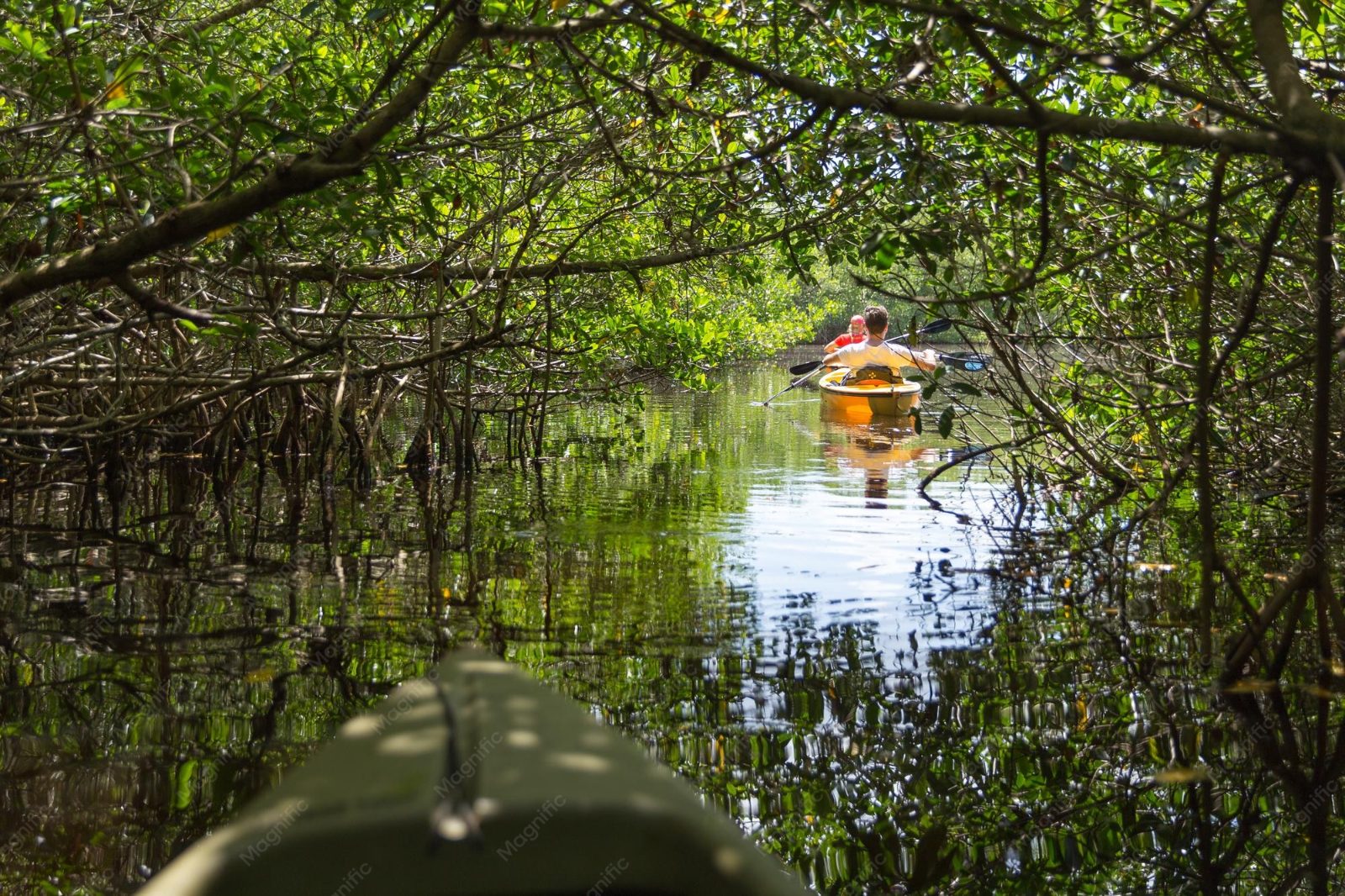
The everglades miami tours we compared all looked similar online, but ours had a small group which made a big difference. We saw alligators sliding off the banks, a soft-shell turtle, and even a manatee shape in a deeper channel. The mangrove tunnels at the end were unexpectedly peaceful
Drifting through the sawgrass prairie with the engine off is something I keep thinking about. A great blue heron stood motionless close enough that we all held our breath. The captain balanced the thrill of the fan boat with real respect for the wetland
Came in February and the dry season concentrated the wildlife around the remaining water, so alligator sightings were constant. Grabbing everglades miami tickets in advance saved us a long wait at the dock. The light in the late afternoon turned the whole marsh gold
The mangrove sloughs are a paradise for anyone with binoculars, though I would skip the loudest airboats if you want to hear the birds. We logged herons, ibis, and a wood stork in one afternoon among the miami wetlands. Booking a smaller boat is worth the extra cost
We timed our everglades miami tour for the last departure and watched the sun drop behind the cypress domes. The water went completely still and mirrored the sky in orange and pink. Our guide cut the motor so we could just take it in
I was worried it would feel like a tourist trap but the vastness of the river of grass changes that fast. Alligators, turtles, and a curious raccoon on the bank kept the kids glued the whole ride. The everglades miami landmarks like the old ranger boardwalks are quietly beautiful
Summer visit meant dramatic afternoon thunderheads building over the sawgrass, which made for astonishing skies. Repellent is mandatory this time of year and I still got bitten. The guide's knowledge of the ecosystem turned a simple boat ride into a real education
Everything you need to know for your journey
Shark Valley Visitor Center is open daily from 08:30 to 18:00, with vehicles required to exit the loop road by 6 PM.
Yes. The paved 15-mile loop and the ramp to the observation tower's mid-level viewing platform are wheelchair accessible, though the tower's uppermost stairs are not.
Prohibited items include drones without a permit, glass containers on trails, fireworks, and feeding wildlife, among other standard national park restrictions.
Personal cameras, video, and tripods are welcome throughout Shark Valley, including on the tram and from the observation tower, as long as equipment doesn't block the tram lane.
Arriving between 08:30 and 10:30 offers cooler temperatures, more active wildlife, and lighter crowds before midday heat and weekend traffic build up.
There's no formal dress code, but light, breathable clothing, closed-toe shoes, and sun protection are recommended given the shade-free loop road.
The visitor center has a vending machine and picnic tables, but there's no restaurant on site, so bringing your own water and snacks is advised.
Shark Valley sits about 45 minutes west of downtown Miami via the Tamiami Trail (US-41), with free parking at the visitor center lot.
Yes, the paved loop and short spiral tower ramp are manageable for most children, and ranger-led tram narration is designed to keep younger visitors engaged.
The $35 per-vehicle 7-day pass is non-refundable once purchased; separately booked tram tours or bike rentals typically allow cancellation up to 24 hours ahead.
The on-site Otter Cave Hammock Trail and Bobcat Boardwalk pair well with a loop visit, and the nearby Miccosukee Indian Village offers a cultural stop just down the Tamiami Trail.
Entry is $35 USD per vehicle for a 7-day pass, plus a $100 nonresident fee per adult, payable at the Shark Valley gate.
A cultural center on the Miccosukee Reservation along the Tamiami Trail featuring traditional chickee structures, craft demonstrations, and airboat tours.
A private wildlife park along US-41 offering airboat rides and alligator exhibits distinct from the National Park Service's Shark Valley unit.
A quarter-mile limestone loop trail through a tropical hardwood hammock with small footbridges over solution holes.
A half-mile self-guided boardwalk crossing sawgrass slough and hardwood forest just behind the visitor center.
A neighboring federal preserve along the Tamiami Trail known for cypress swamp scenery and roadside alligator viewing.
Suburban Miami neighborhoods with a range of chain hotels offering the closest lodging base for an early Shark Valley start.
A gateway town near the park's south entrance with mid-range hotels and motels convenient for combining Shark Valley with other Everglades entrances.
High-rise hotels and resorts offering full city amenities, roughly 45 minutes from the Shark Valley gate via the Tamiami Trail.
A Gulf Coast city with boutique and resort lodging, useful for visitors approaching Shark Valley from the western side of the park.
Join thousands of happy travelers who have discovered this incredible experience
Book Your Experience Now