3 hr
Everglades Mangrove Tunnel Kayaking Eco-Tour
- Entry ticket
- Mobile voucher
- Valid same day
- Free cancellation
Everglades Kayak Tour — Guided Mangrove Paddling Trips
Slow water past sawgrass, silence broken only by wings.
Compare fares, pick the fit — all bookings are mobile-voucher and eligible for free cancellation where shown.
3 hr
4 hr
9 hr
Worth it for paddlers, pricey for casual visitors
An everglades kayak tour pays off if you actually paddle. Entry is $35 for a seven-day vehicle pass, plus a $100 nonresident fee per person age 16+, so a two-adult carload of visitors clears $235 before a single stroke. Bring your own boat or rent one, and that self-guided paddle through mangrove tunnels and sawgrass marsh delivers manatees, wading birds, and gators at close range for no added ticket. Book a guided everglades kayak tour instead and an outfitter adds roughly $60–$100 per head, but you get a naturalist, gear, and shuttle. Guided everglades kayak tour tours suit first-timers wary of navigation; a self-guided everglades kayak tour tour rewards confident paddlers. Skip-the-water sightseers who won't launch a boat get thin value from everglades kayak tour tickets. Weigh the wildlife access and backcountry solitude against those stacked fees honestly.
Bottom line: If you paddle, it earns its price; if you only look, it won't.
Most paddlers who compare Everglades landmarks head first to Nine Mile Pond, since its open marsh and mangrove-island mix delivers better wildlife odds than the tighter, harder-to-read Hell's Bay Canoe Trail.
|
Top pick Nine Mile Pond |
Hell's Bay Canoe Trail | |
|---|---|---|
| Scenery | Open marsh, sawgrass, mangrove islands | |
| Dense mangrove tunnels, small bays | Scenery variety lower once inside tunnels | |
| Wildlife odds | Alligators, wading birds, occasional large crocodile | |
| Distance/length | 5–5.9 mile loop | |
| Difficulty & navigation | Moderate — numbered poles, wider channels | |
| Crowds | Moderate, popular day-trip pick | |
| Best for | First-timers, half-day paddlers, wildlife viewing | Experienced paddlers, backcountry camping trips |
| See tickets & prices |
Verdict: Nine Mile Pond suits a half-day everglades kayak tour built around wildlife sightings, while Hell's Bay rewards paddlers seeking quiet, technical mangrove navigation over a longer haul.
Hand-picked experiences loved by thousands of travelers
3 hours
Free Cancellation
Discover the unique UNESCO-listed 10,000 Islands of the Everglades with an expert Florida Master Naturalist guide.
3.5 hours
Free Cancellation
Explore the remote Florida wilderness by boat and kayak with an expert Master Naturalist guide.
5.5 hours
Free Cancellation
Experience the Everglades by land, water, and air on this dual-activity wetland tour.
Check in at Ernest F. Coe Visitor Center, pay the vehicle pass, and pick up a trail map before heading to the launch.
A 3- or 5-mile loop that mixes open sawgrass prairie with narrow mangrove tunnels, this beginner-friendly route can become impassable from late February until summer rains return in June. It is the single most-traveled route for a first everglades kayak tour.
Nicknamed hell to get into and hell to get out of, this 11-mile round-trip route winds through dense mangrove creeks marked by more than a hundred numbered poles. Paddlers must split their paddle into two pieces to steer through its tightest passages.
A compact 1.9-mile loop through a maze of narrow mangrove tunnels and small ponds, this trail serves as a shorter, more sheltered alternative to Hells Bay on windy days. Over 120 numbered PVC markers keep paddlers from getting lost in its identical-looking channels.
Stretching 7.7 miles one-way to Alligator Creek, this route crosses several large open lakes connected by mangrove-lined creeks and is known for manatee sightings. Its open water can turn choppy on windy afternoons, unlike the sheltered tunnel trails nearby.
The park's main gateway and largest visitor center, named for the landscape designer who spent two decades campaigning for the Everglades' national park status. It houses the park's primary museum, an orientation theater, and the desk where paddling permits and trail maps are issued.
Located at the southern tip of the park on Florida Bay, this marina and concession point rents kayaks and canoes and serves as the launch for the Wilderness Waterway, a 99-mile backcountry route. It marks the transition from freshwater sloughs to coastal mangrove and open bay paddling.
You launch from the mangrove edge with the water still glassy, your paddle breaking a surface that reflects the whole grey-green sky. The first strokes carry you out of the open bay and into a narrowing creek, where prop roots close overhead and the light drops to a cool tunnel-green. You slow. You learn to read the water — a swirl ahead, a heron lifting off a snag, the wake of something you never quite see. Deeper in, the channel forks and forks again. Your guide points out a spoonbill wading the shallows, its bill sweeping side to side, and you drift close enough to hear it feed. You pass beneath a canopy loud with birdsong, then out into an open sawgrass flat where the horizon flattens to a single line. Here you rest the paddle across the cockpit and let the current hold you. On the return leg the tide has turned, and the creeks run faster now, pushing you gently back toward the launch. You ship your paddle for a moment, arms warm, and simply listen. This everglades kayak tour ends where it began, but the maze of water behind you feels entirely changed — read, not just crossed. You lift the boat, salt-damp and quiet, back onto the bank.
All the details about your upcoming adventure in one place
This everglades kayak tour glides through mangrove tunnels and sawgrass marsh where wading birds, manatees, and the occasional alligator share the calm brackish water. Guided everglades kayak tour tours pair a naturalist with small groups, so paddlers of any level can read the tidal flats and cypress domes at an easy pace. Booking covers stable sit-on-top kayaks, paddles, and dry bags across the Ten Thousand Islands estuary.
The Everglades is not a swamp but a river — a sheet of water sixty miles wide and inches deep, sliding south from Lake Okeechobee toward Florida Bay at a pace of roughly one hundred feet per day. Marjory Stoneman Douglas named it the "River of Grass" in 1947, and the phrase reshaped how a nation saw ground it had spent decades trying to drain. An everglades kayak tour moves across the surface of that slow river, tracing channels older than any road in the state. The park was established in 1934 and dedicated by President Truman in 1947, the first American preserve protected for its living system rather than its scenery. It spans roughly 1.5 million acres, and UNESCO has recognized it three times over — as a World Heritage Site, a Biosphere Reserve, and a Wetland of International Importance. Few landscapes carry that weight of designation, and fewer still remain as fragile. Water defines everything here. Sawgrass prairies give way to mangrove tunnels, hardwood hammocks, and cypress domes, each holding its own community of life. The mangroves, with their arching prop roots, form the nursery for much of South Florida's marine fishery, and the tannin-dark creeks that thread between them are the arteries a paddler follows. American alligators and crocodiles share this water — the only place on earth where both species coexist — alongside roseate spoonbills, wood storks, and the near-invisible Florida panther. The mangrove kayak tour reveals a geography that resists the eye from land. From a road, the Everglades looks flat and repetitive; from the waterline, it resolves into corridors, dead ends, and open bays that shift with the tide. Guides on an Everglades paddling trip read these channels the way earlier peoples did — the Calusa and later the Seminole, who moved through this maze in dugout canoes centuries before the first survey line was drawn. Today the Everglades stands as both sanctuary and warning. Half the historic wetland has been lost to agriculture and development, and a multi-billion-dollar restoration effort now works to return water to its old paths. The quiet that surrounds a kayak here is the sound of a system still holding on. To paddle it is to enter one of the last great subtropical wildernesses in North America, and among Everglades landmarks, none is experienced so intimately as its water. That is the enduring draw of the everglades kayak tour.
From the waterline, the flat prairie resolves into corridors, dead ends, and open bays that shift with the tide.
Quick-dry synthetic layers, a long-sleeve sun shirt, and secured water shoes or sandals with a heel strap are standard for an everglades kayak tour, since launches like Nine Mile Pond involve wading through shallow marsh. Cotton is discouraged because it stays wet for hours in the humidity. A wide-brim hat and polarized sunglasses cut glare off the open sloughs.
There is no bag screening or metal detection at Everglades National Park launch points, but rangers do check that kayaks and canoes are registered and that paddlers carry a personal flotation device. Dry bags are strongly recommended on any everglades kayak tour since there is no covered storage on the water and sudden squalls are common in summer.
Personal photography and video are permitted throughout the park at no extra charge, including from the kayak itself, but drones require a special use permit and cannot be launched or landed without one. Waterproof camera housings or floating wrist straps are advisable since gear that goes overboard on an everglades kayak tour is rarely recovered.
Children must meet a minimum weight for a properly fitting PFD, and most outfitters set a minimum age around 5-6 for a shared tandem kayak on calmer routes like Nine Mile Pond. Every rider, regardless of age, is required to wear a life jacket for the full duration of the paddle.
The Ernest F. Coe and Guy Bradley (Flamingo) visitor centers have paved parking, ramps, and accessible restrooms, and the Nine Mile Pond launch has a hard-surface dock. Backcountry trails like Hells Bay and Noble Hammock involve unassisted entry into a kayak from an uneven bank, so paddlers with mobility limitations should call ahead to arrange an accessible launch.
Visitors may bring their own food and water onto the water and eat it in the kayak or during a break on one of the marked platforms, since there are no concessions or restaurants along any backcountry paddling trail. All food waste and packaging must be packed out, as there are no trash receptacles once past the main visitor centers.
Park never closes, gates always open
Park access
Open 24 hours daily, but the Ernest F. Coe Visitor Center only staffs 09:00–17:00
Car · 45-60 min from Miami · Free parking at visitor centers and trailheads
From Miami, take the Florida Turnpike south to US-1, then turn onto Palm Drive (State Road 9336) toward the park entrance and continue to the visitor center or launch points along Main Park Road.
Most outfitters running an everglades kayak tour allow free rescheduling or a full refund up to 24 hours before departure, with no refund for same-day cancellations due to weather already deemed safe for paddling. The park's own $35 seven-day vehicle pass is non-refundable once issued, regardless of how the everglades kayak tour itself is booked.
Recommended time
4-5 hours
Most paddlers budget four to five hours for the full Nine Mile Pond loop, and a bit longer if low water forces backtracking around the marker poles. An everglades kayak tour that pushes into Hell's Bay territory instead of turning back early can stretch past five hours once mangrove tunnels slow your pace. Launching inside the 07:00-09:00 arrival window buys cooler air and calmer water before afternoon thunderstorms build, and there's no ticket queue to worry about since put-ins are self-serve. Add 30-45 minutes if you're renting gear or waiting for a ranger-led group to shove off.
Crowd levels through the day
Weather · crowds · average price — dots go green to amber to red as each metric rises.
Dry season brings the coolest temperatures, lowest humidity, and the heaviest concentration of wading birds and alligators along open sloughs. This is the busiest period for an everglades kayak tour, so early launches help avoid crowded put-ins.
Wildlife is most active and water is glassiest in the first two hours after sunrise, before afternoon wind picks up on open trails like Nine Mile Pond.
40001 State Road 9336, Homestead, FL 33034
Main check-in point for permits and maps
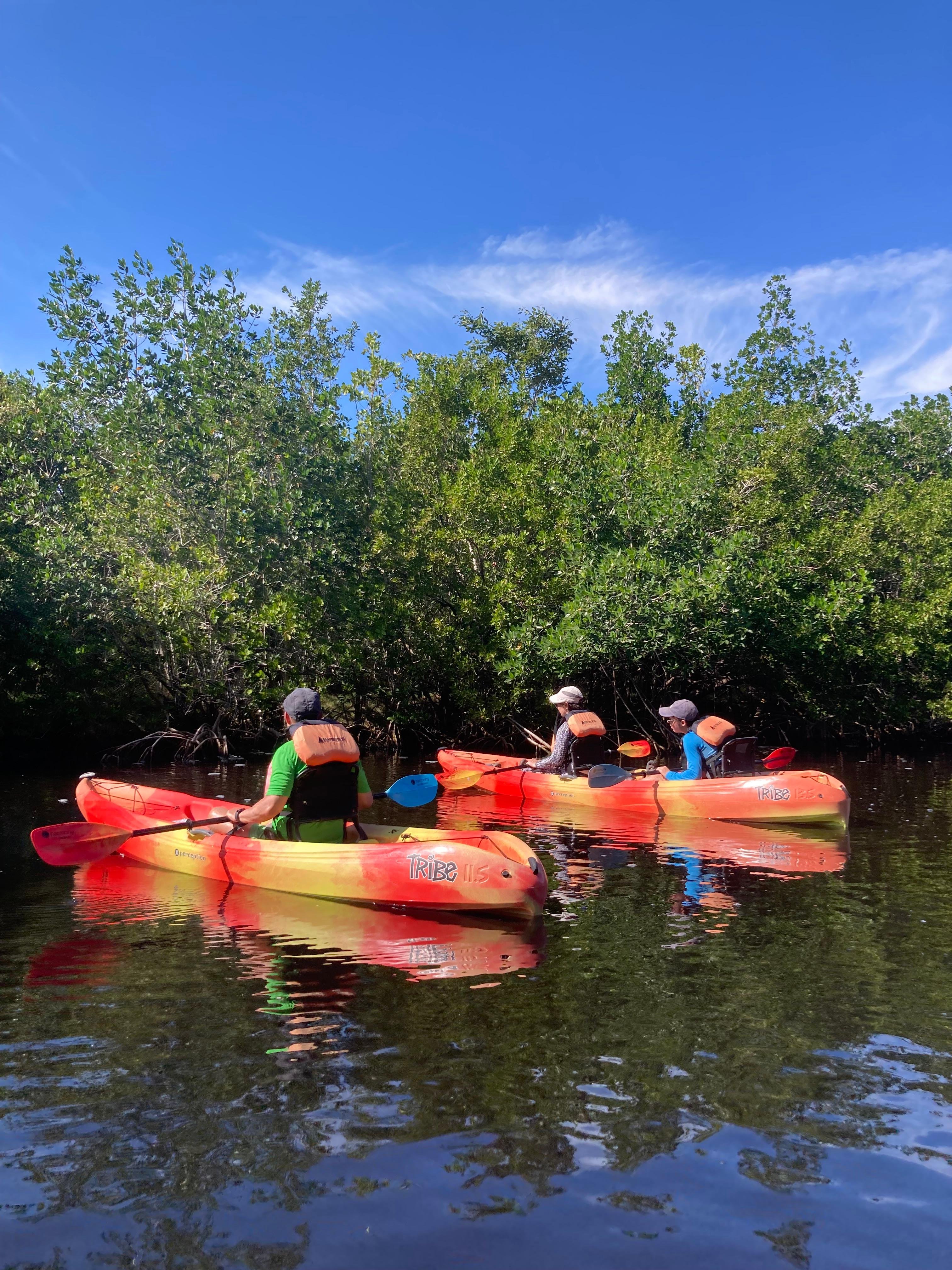
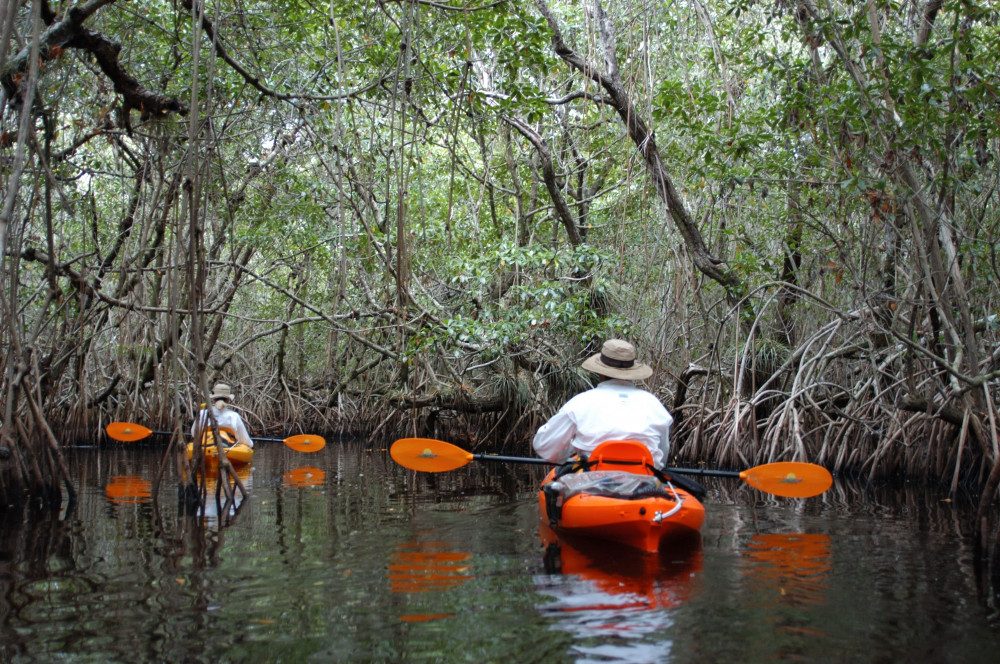
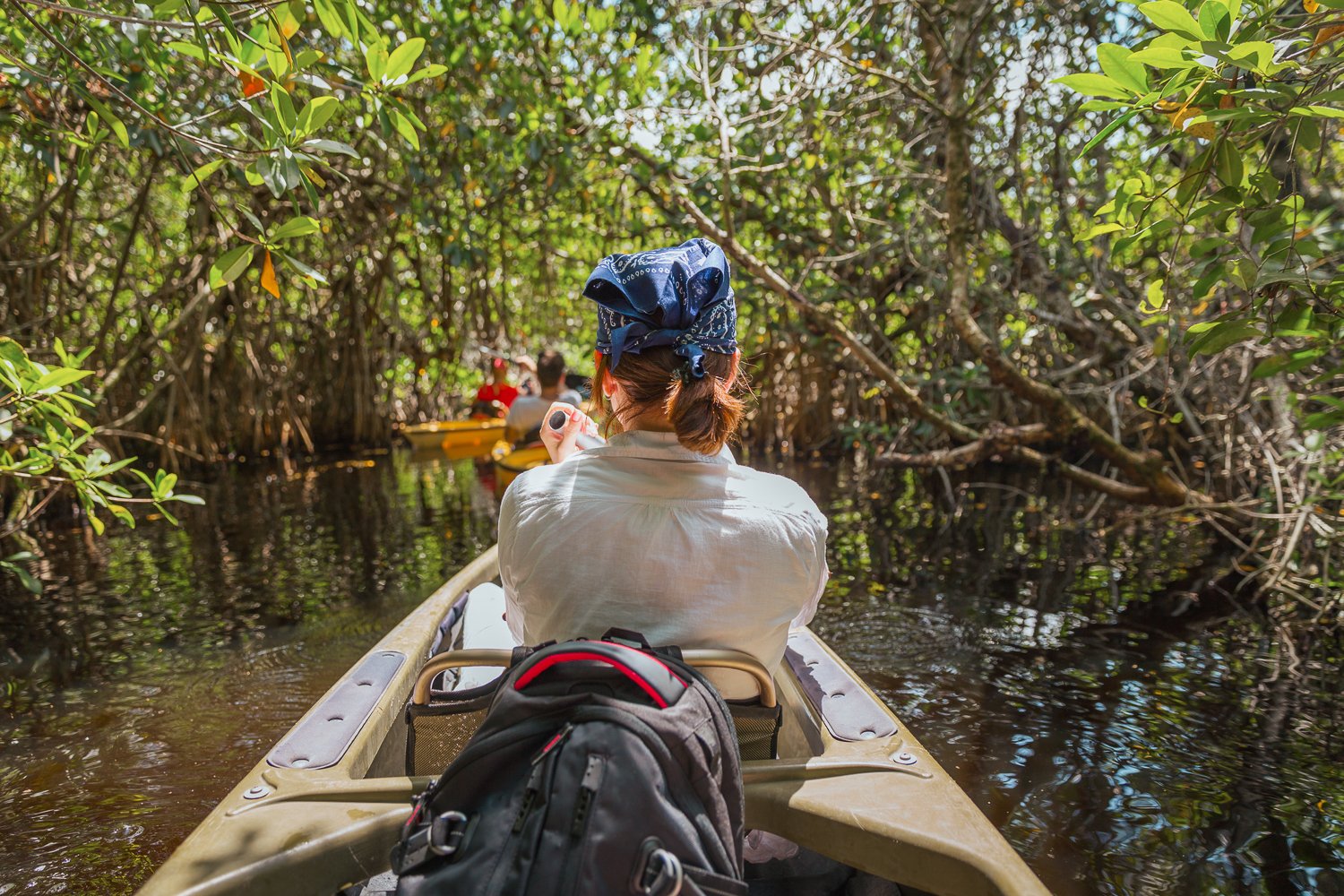
Get directionsThe narrow red mangrove corridors along the marked loop force paddles close together, framing tight green tunnels of light overhead; an everglades kayak tour through this stretch works best paddled counterclockwise from the unmarked launch area right of the parking lot.
Stacked kayaks and canoes line the seawall against calm marina water, with Buttonwood Canal reflections and boat slips as backdrop; stand near the boat ramp at first light before rentals and tours crowd the dock.
Wading birds including roseate spoonbills and wood storks roost along the mangrove-lined far shore of this pond just off Main Park Road, visible from a canoe pushed a short distance from the small launch.
The mudflat and mangrove-tunnel approach open onto a wooden viewing platform over Florida Bay, where spoonbills, herons, and egrets gather on the exposed flats at rising tide.
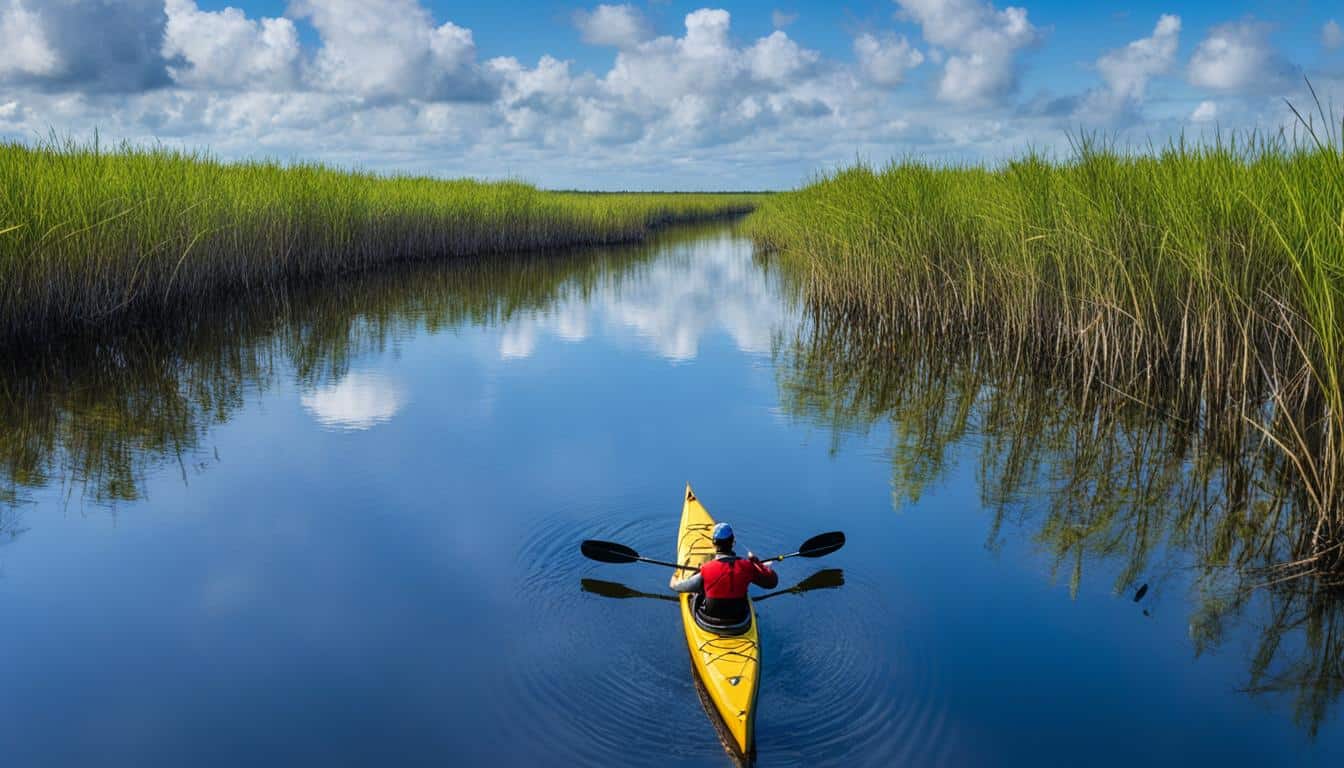
Past the tunnels, the trail opens into shallow sawgrass marsh dotted with mangrove islands, giving wide sightlines for spoonbills and herons wading between white PVC trail markers.
Paddling the Buttonwood Canal from Flamingo into Coot Bay, the mangrove tunnel suddenly breaks into an open lake view, a favored spot for wide shots of water and sky on Everglades kayak tour tours.
An everglades kayak tour with children works best as a short, well-paced paddle rather than a marathon loop, since there are no dry banks along the route to stretch or regroup. Families who plan around the shortcut and pack the right gear tend to have the easiest day on the water.
Skip the full 5-mile Nine Mile Pond loop and take the 3.5-mile shortcut at marker 44A, which cuts a slow, muck-heavy stretch and shaves an hour or more off the paddle. It keeps young paddlers from tiring mid-marsh with no bank to land on.
Guided canoe programs on this route generally require paddlers to be 12 and older with real paddling experience, since canoes need two people working together to steer. Younger kids can still go along in a rental kayak with an adult doing most of the paddling.
Build in a pause every 30-45 minutes near the two small ponds before the main pond, where there's calmer water and good bird and gator watching. There are no dry landing spots on this everglades kayak tour, so rest stops happen on the water, not on shore.
Bring reef-safe sunscreen, a hat with a chin strap, and long sleeves, since there's no shade across the open prairie sections. Pack bug spray and consider a head net for kids, as mosquitoes are heaviest near the mangrove tunnels.
The Nine Mile Pond launch area has open parking but no restrooms, water, or shade structures, so use facilities at the Flamingo or Ernest Coe visitor centers beforehand. Bring all drinking water with you, since none is available on the trail.
Food inside the park is limited to what you carry with you, so most people planning an everglades kayak tour pack a lunch and cooler and treat the Homestead corridor as the real dining stop before or after paddling.
Sits steps from the Flamingo boat ramps and sells sandwiches, chips, cold drinks, and ice. It gets busy right after morning tours pull in off the water. Good for a fast pre-launch coffee or a post-paddle snack, not a sit-down meal.
A full-service spot inside the lodge serving grouper, burgers, and gator bites with Florida Bay views. Best for a relaxed lunch after finishing on the water, since it can be slow when tour groups arrive together. Reservations help on weekends.
A Homestead roadside institution since 1959, known for thick tropical fruit milkshakes and a petting zoo out back. It suits a quick, kid-friendly stop before heading into the park rather than a full meal. Lines form at the shake counter by midday.
A family-run spot near the park entrance serving breakfast through dinner, with burritos and molcajete dishes as the draws. Works well as a hearty meal after a morning paddle. Evenings can bring a short wait for larger groups.
Real experiences from real travelers
Our everglades kayak tour launched from Everglades City just after 8am and the water was like glass. We paddled the Turner River mangrove tunnels and spotted an alligator, a manatee snout, and dozens of wading birds. The guide knew the tides cold, which mattered because the channels get shallow fast.
Booked the small-group option and there were only six of us on the water. The tannin-stained channels through the sawgrass felt genuinely wild, and the red mangrove roots arch right over your head in places. Bring a hat because the open flats have zero shade.
The wildlife paddling was the highlight of our Everglades trip, with roseate spoonbills and an alligator basking on the bank. Our everglades kayak tour ran a bit long in the midday sun and I wished we had started earlier. Water and sunscreen are essential.
We chose the Ten Thousand Islands route and the maze of mangrove islets was disorienting in the best way. A pod of dolphins crossed our bow near the open water. The guide handled the tidal currents so we never felt out of our depth.
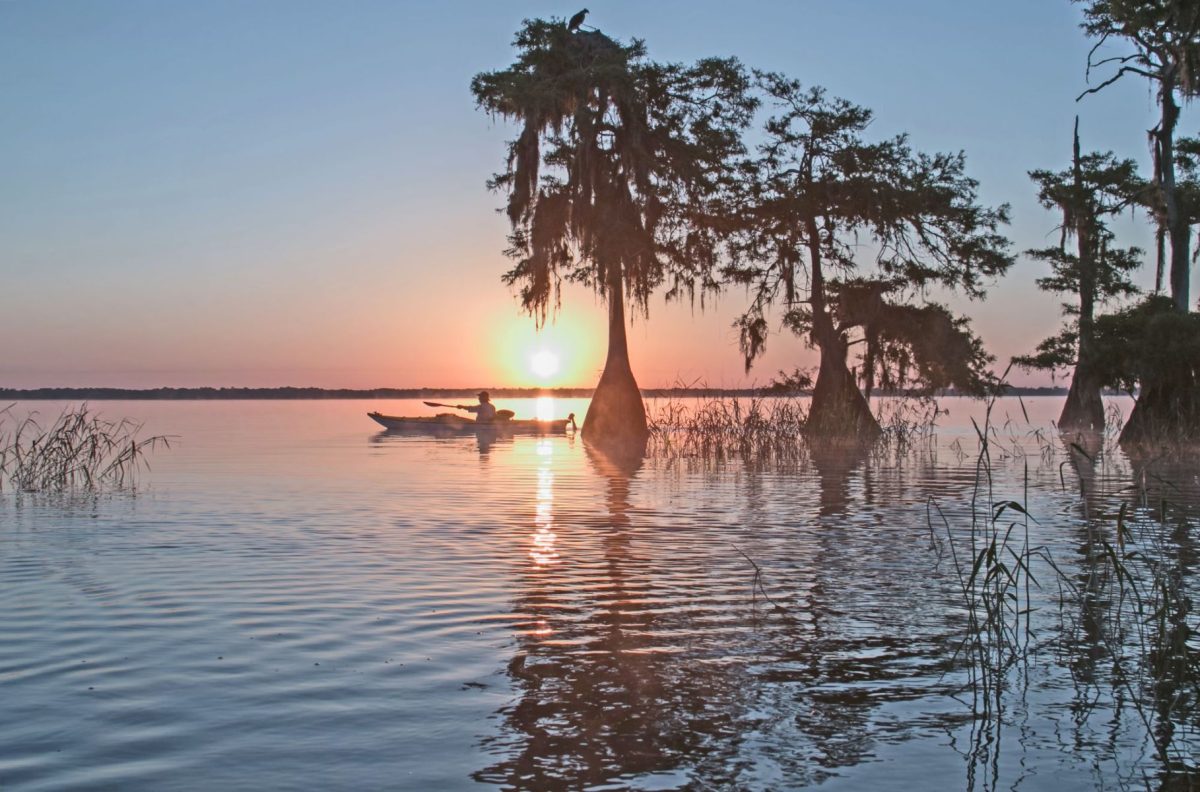
The evening everglades kayak tour we booked ended with the sky going orange over the lagoon and birds settling into the mangroves. Everything was still except our paddles. Mosquitoes picked up at dusk so pack repellent.
Smooth operation from check-in to launch, with stable sit-on-top kayaks that suited beginners. We saw an alligator, an osprey diving, and countless herons stalking the shallows. The everglades kayak tour tickets were easy to sort online the night before.
January mornings on the water were cooler than expected and the tannin channels had a light mist at dawn. This everglades wildlife paddling experience showed us the sawgrass prairie from water level, which no boardwalk can match. A dry bag for phones is worth it.
Our guide read the mangrove creeks like a map and found a quiet backwater full of little blue herons. The everglades kayak tour tour felt personal rather than rushed, and he shared a lot about the wetland ecosystem. Go for the early slot to beat the heat.
Paddling the mangrove tunnels near Everglades City was the calmest morning of our whole Florida trip. The water was mirror-flat and we drifted past a sunning gator without a sound. Among the everglades kayak tour tours we compared, the small-group one was the right call.
The sawgrass flats opened up into wide skies and the birdlife was constant, from anhingas drying their wings to spoonbills feeding. Our guide timed the tide perfectly so the return paddle was easy. Start early and you will have the channels mostly to yourself.
Everything you need to know for your journey
The park itself never closes and marked canoe trails are accessible around the clock, though the Ernest F. Coe Visitor Center only staffs the desk from 09:00 to 17:00 for permits and maps.
Main visitor centers and the Nine Mile Pond launch dock are paved and ADA-compliant, but narrower routes like Hells Bay require unassisted entry from an uneven bank.
There is no bag or metal-detector screening at launch points, but rangers verify PFDs and check that vessels are properly registered before an everglades kayak tour begins.
Personal cameras are welcome at no extra cost, but drones require a special use permit and cannot be flown without one anywhere in the park.
Early mornings in the 07:00-09:00 window offer calmer water and cooler air, and visiting outside the busy winter dry season also means smaller crowds at popular launches like Nine Mile Pond.
Quick-dry layers, a long-sleeve sun shirt, secured water shoes, and a wide-brim hat are standard for a comfortable everglades kayak tour in Florida's humidity.
Yes, personal food and water are allowed in the kayak and at rest stops, but all packaging and waste must be packed out since there are no trash bins on the trails.
Public buses reach Homestead and Florida City, but there is no transit line into the park itself, so a rideshare or taxi covers the final stretch to the launch.
Yes, with a properly fitting PFD required for every rider; most outfitters set a minimum age or weight for tandem kayaks on gentler routes like Nine Mile Pond.
Most outfitters offering an everglades kayak tour allow free changes up to 24 hours ahead, while the park's own $35 vehicle pass is non-refundable once issued.
The Anhinga Trail boardwalk and Pa-hay-okee Overlook are both a short drive from the main launch points and pair well with a morning paddling trip.
Access to the park runs 35 USD for a 7-day vehicle pass, plus a $100 nonresident fee per person age 16 and older; kayak or canoe rental is a separate cost from outfitters.
Trailhead for the Anhinga Trail boardwalk, known for close-up alligator sightings year-round.
Chain hotels and motels cluster near US-1 in Homestead, the closest overnight base for an early-morning launch.
Join thousands of happy travelers who have discovered this incredible experience
Book Your Experience Now