Dry season (Dec-Feb)
Wildlife clusters at shrinking water sources and ranger talks run daily; arrive before 10am to get parking and beat tour groups.
A 1.5-million-acre wetland where airboats, paddle trails and tram routes reach alligators, wading birds and open water.
Water here moves so slowly that it can take a full year to travel from the wetland's northern reaches to the sea, a current measured in inches rather than miles per hour.
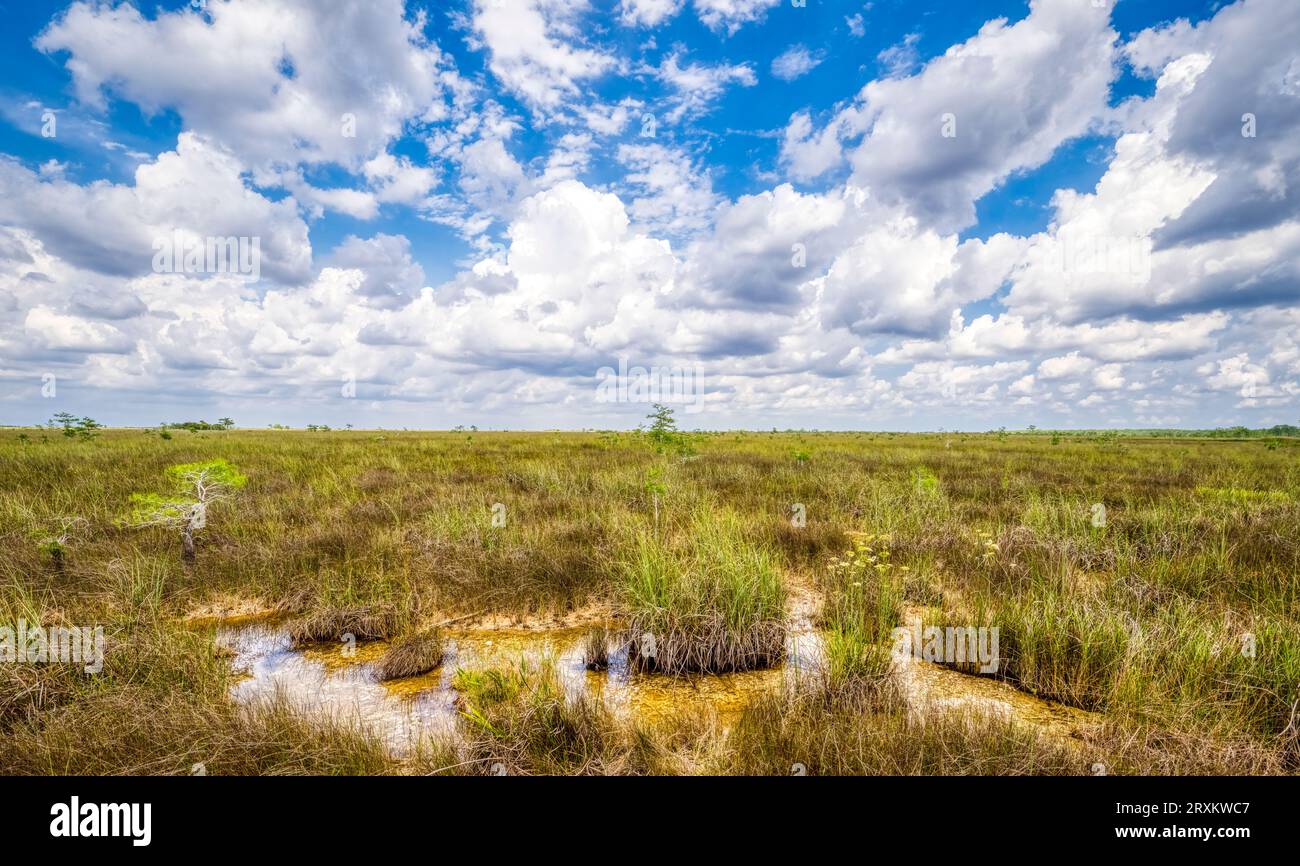
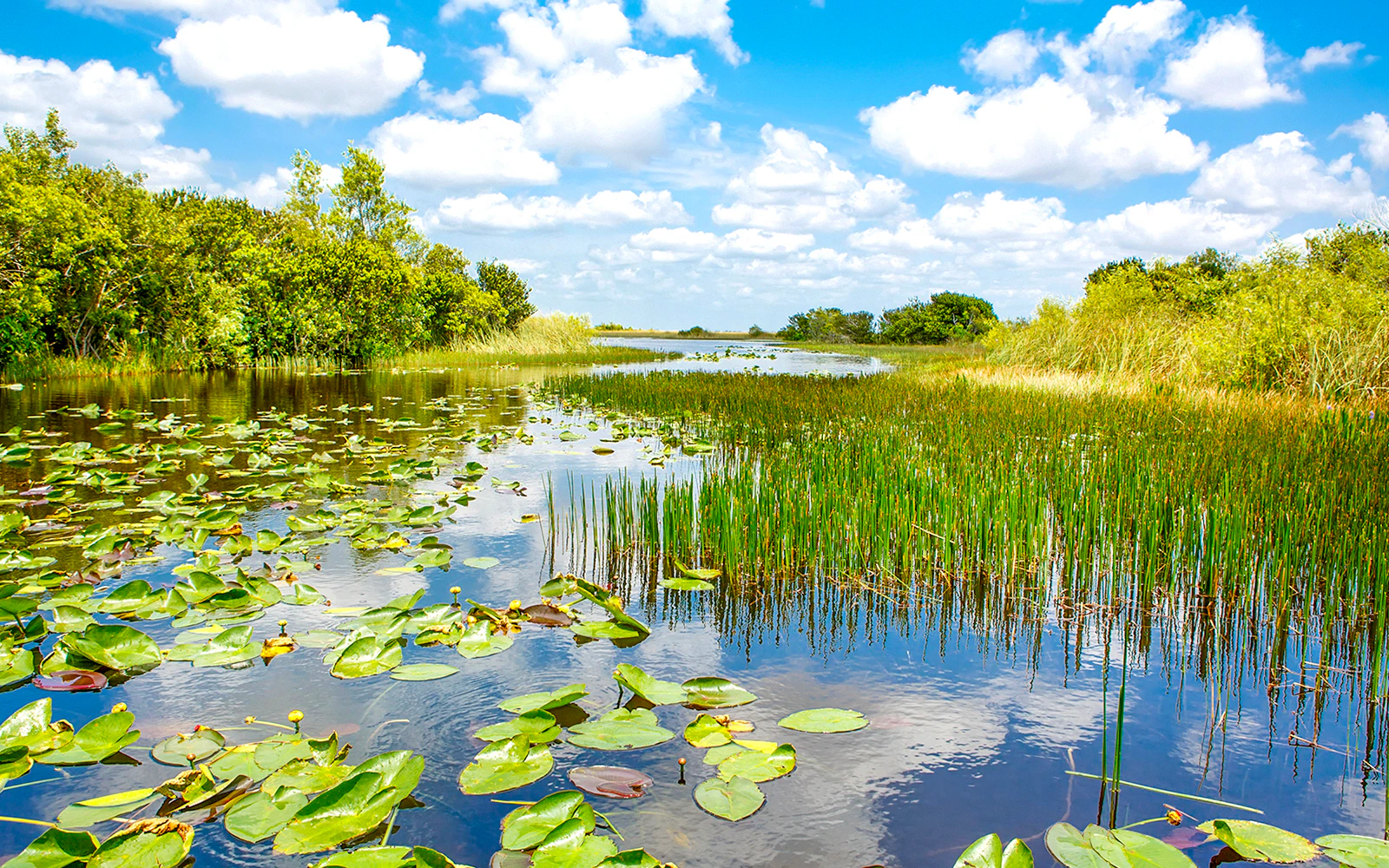
That single fact reshapes how a visitor should read the Everglades: this is less a swamp than a shallow, grassy river sixty miles wide, tilted almost imperceptibly toward Florida Bay. What looks static from a boardwalk is in constant, patient motion.
The landscape was shaped by that flow and by the limestone bedrock beneath it. Rainfall filters through sawgrass prairies, pools in cypress domes, and slides between hardwood hammocks that rise like islands only a few feet above the marsh. Where fresh water meets salt, mangrove forests knit the coastline together, their tangled roots nursing fish, birds and the crocodiles that share this ground with alligators. The result is a mosaic of habitats stitched into one system, each supporting creatures that appear nowhere else in the same combination. Roseate spoonbills, wood storks, anhingas and the shy Florida panther all trace their fortunes to the depth and timing of the water.
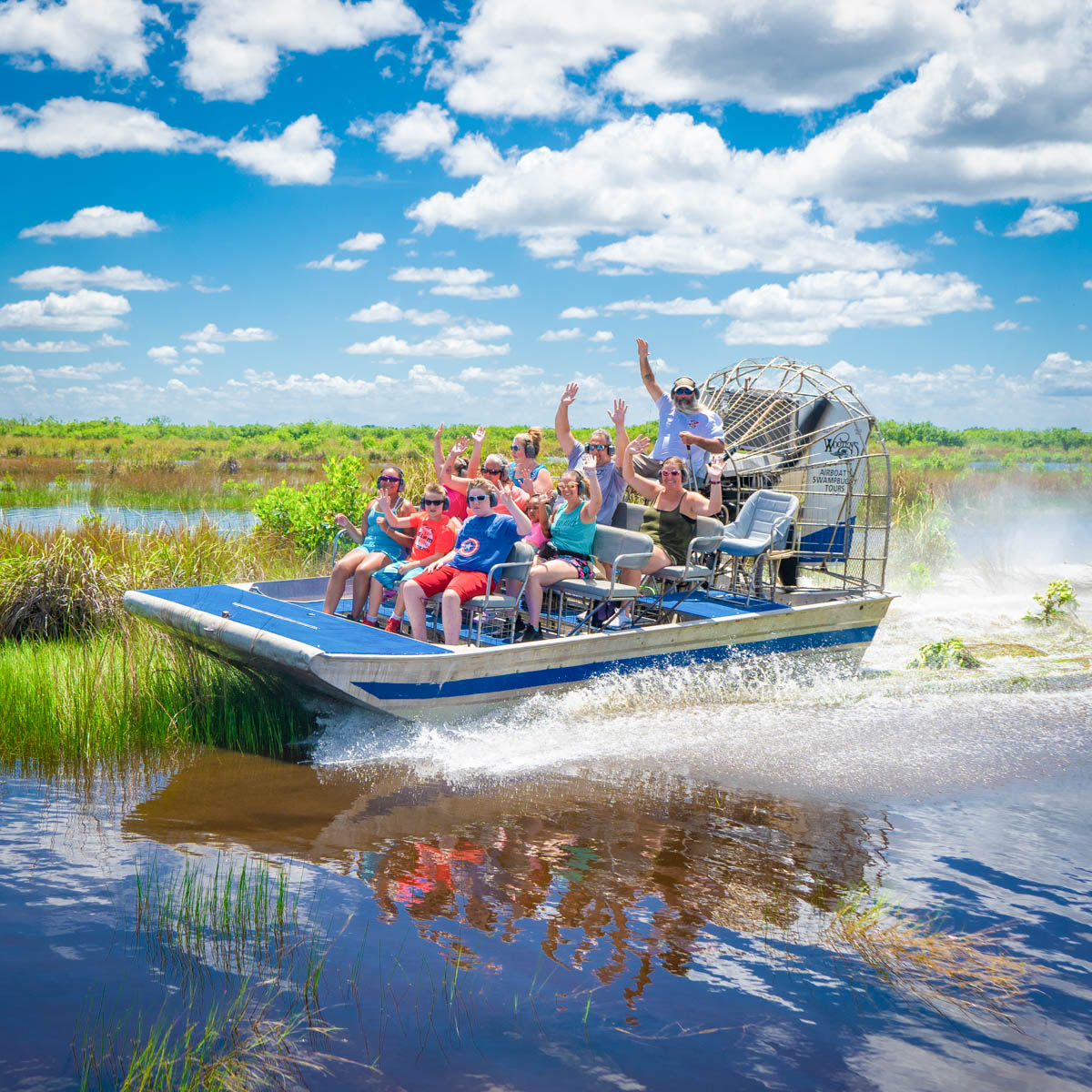
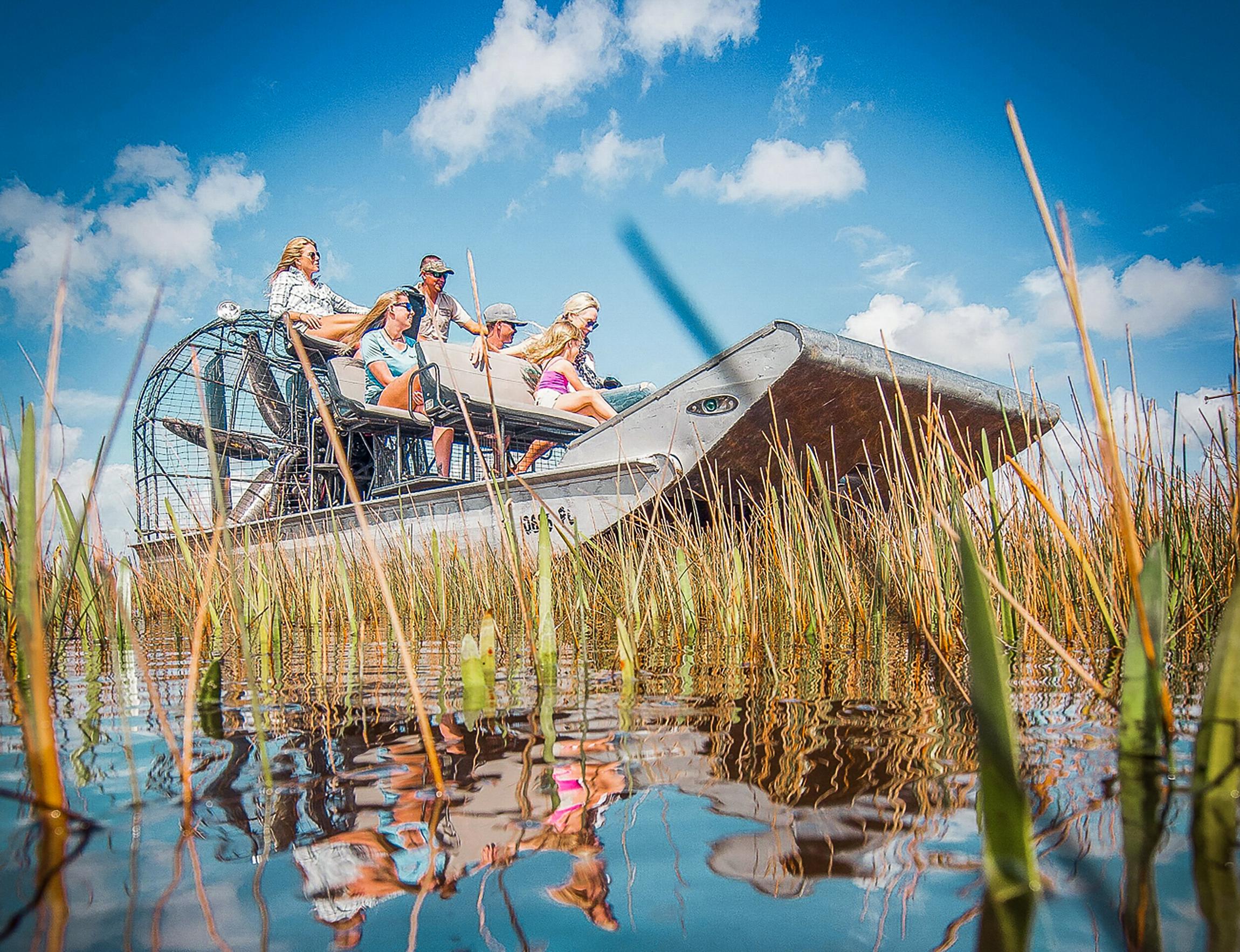
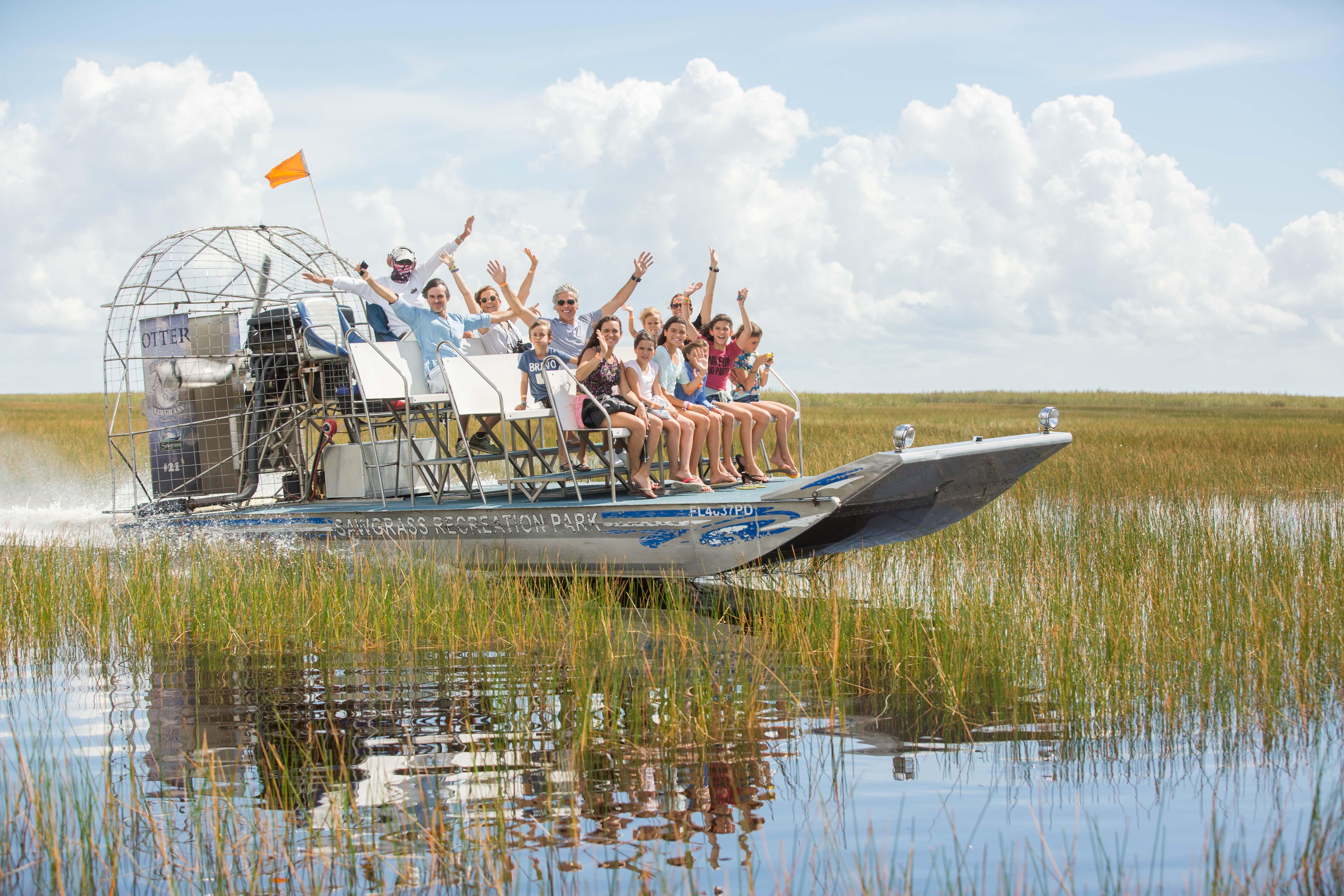
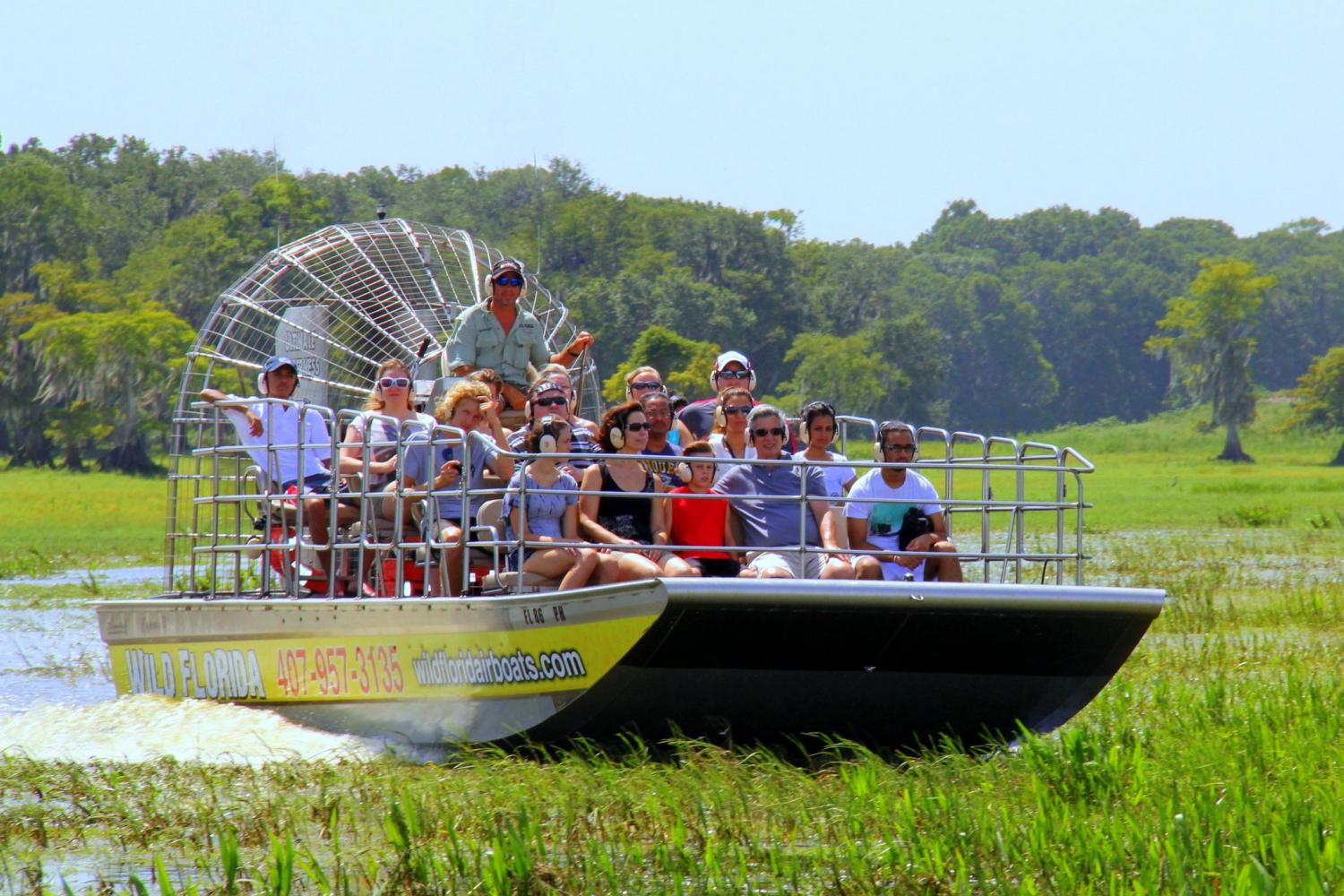
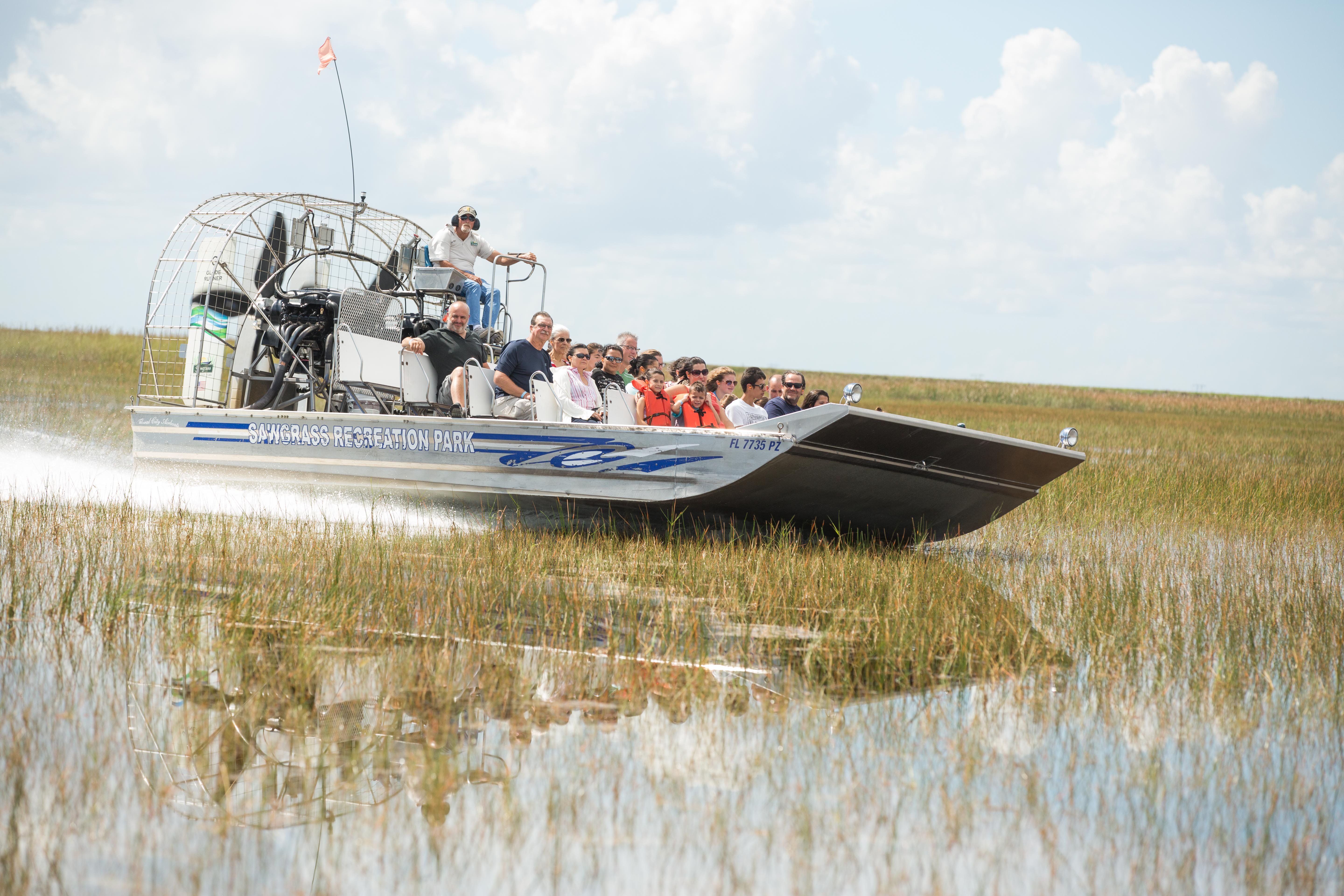
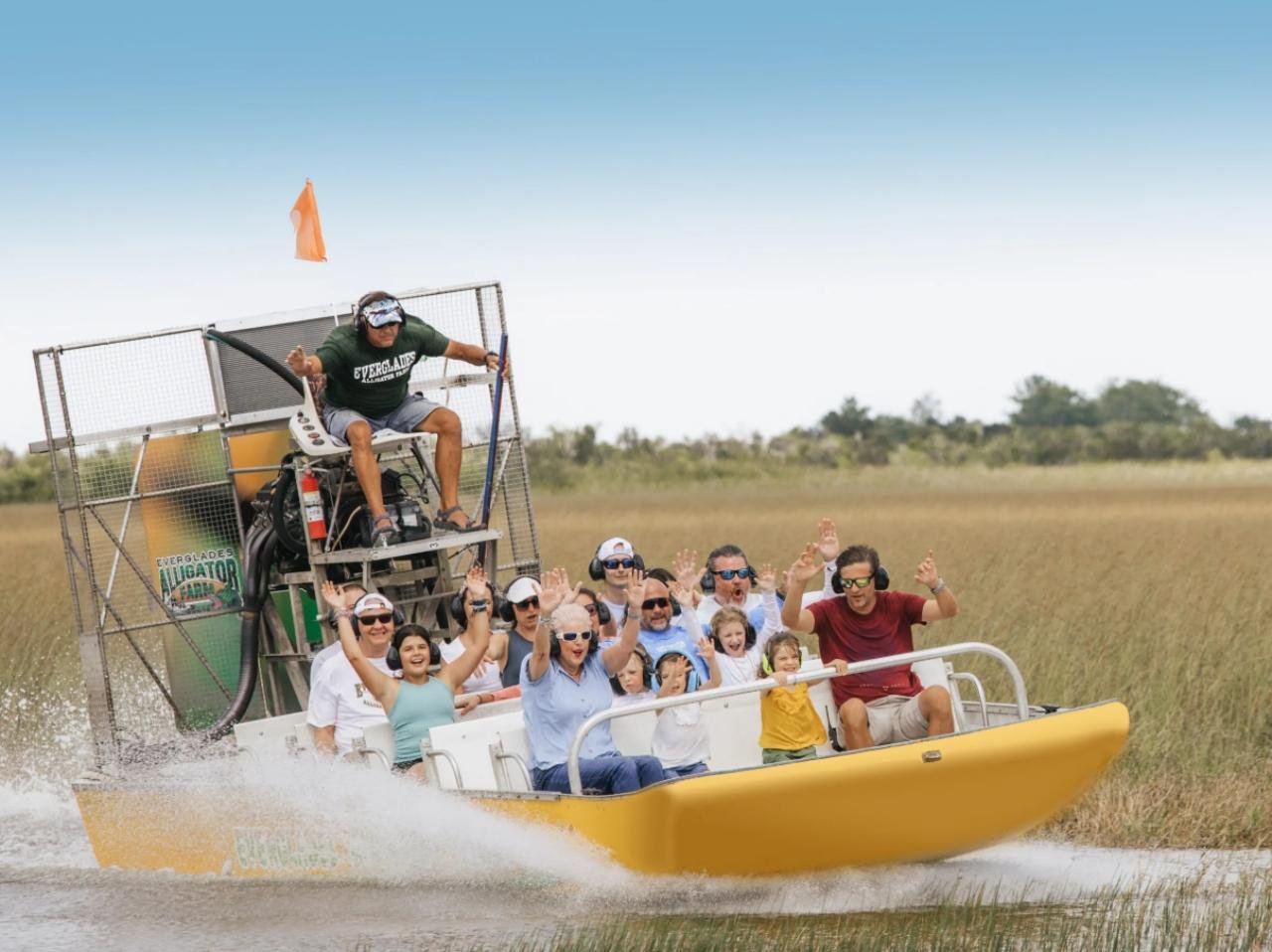
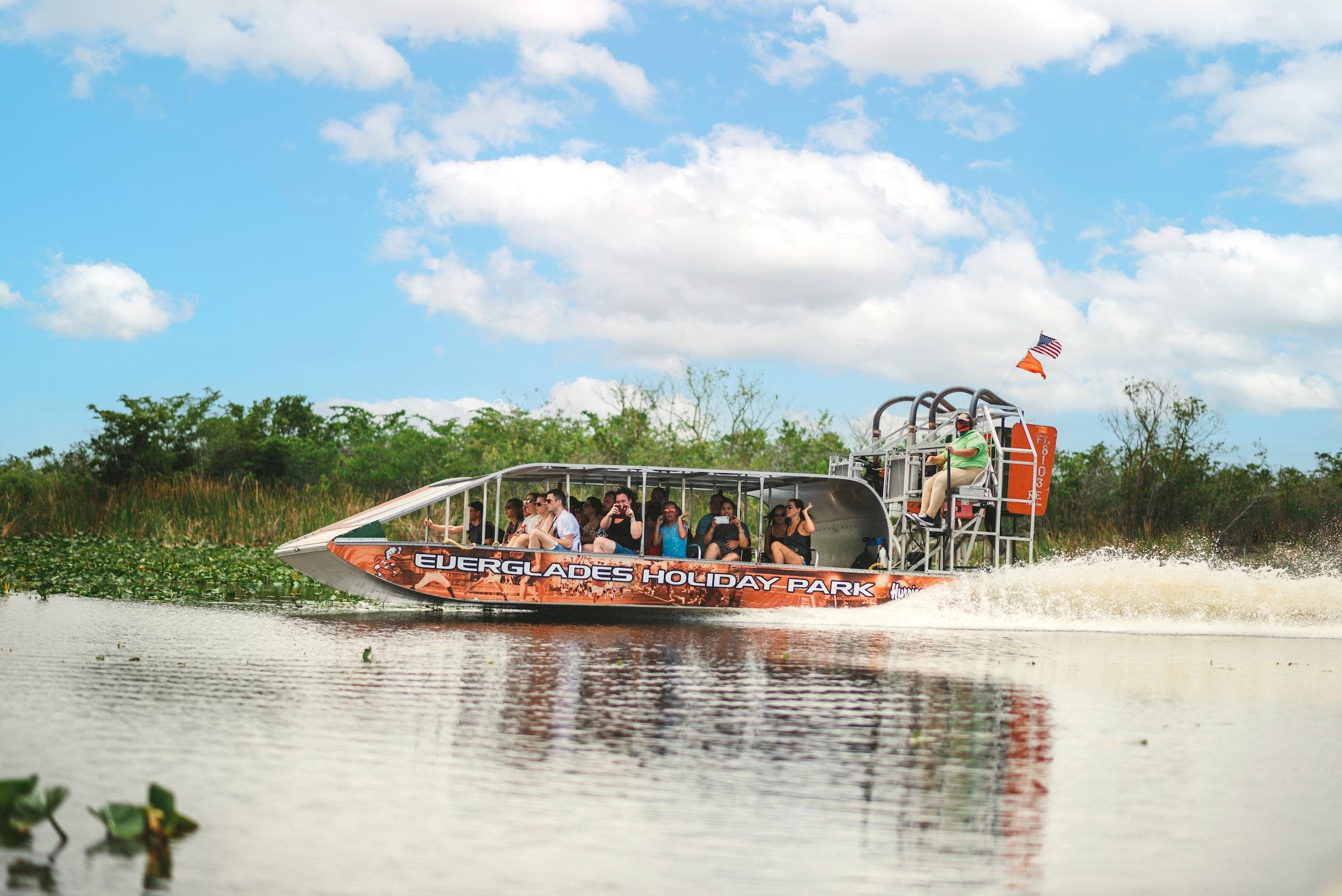
What defines the place today is the range of ways it can be entered. Everglades Tours span open-water airboat runs across the shallows to unhurried paddle routes threading mangrove channels, and the site's own pages organize these clearly. A visitor might book a private airboat tour for the wide sawgrass basin, choose a kayak tour to slip quietly through the mangrove tunnels, or ride the Shark Valley tram loop to watch alligators sun themselves beside an elevated road. Anglers gravitate toward fishing charters that push into the backcountry after snook and tarpon, while those staying in the city compare tours from Miami before committing a day to the marsh. Even a single Everglades airboat tour reveals how differently the wetland behaves at dawn versus dusk.
The destination suits travelers who prefer landscape to landmark and wildlife to crowds — patient watchers rather than sightseers ticking off monuments. It rewards early risers, birders with binoculars, families teaching children to read a horizon, and anglers who measure a good day in stillness. Booking any of the Everglades Tours tickets is best treated as choosing a lens rather than a ride: airboat for breadth, kayak for intimacy, tram for reach. Whichever lens a visitor picks, the River of Grass tends to reveal itself slowly, in the flick of an egret's wing or the low glide of a gator, asking for attention rather than awe.
“Water here moves so slowly that it can take a full year to travel from the wetland's northern reaches to the sea.”
A sheet of freshwater inches south through miles of sawgrass, the defining hydrological feature that shapes every habitat in the park.
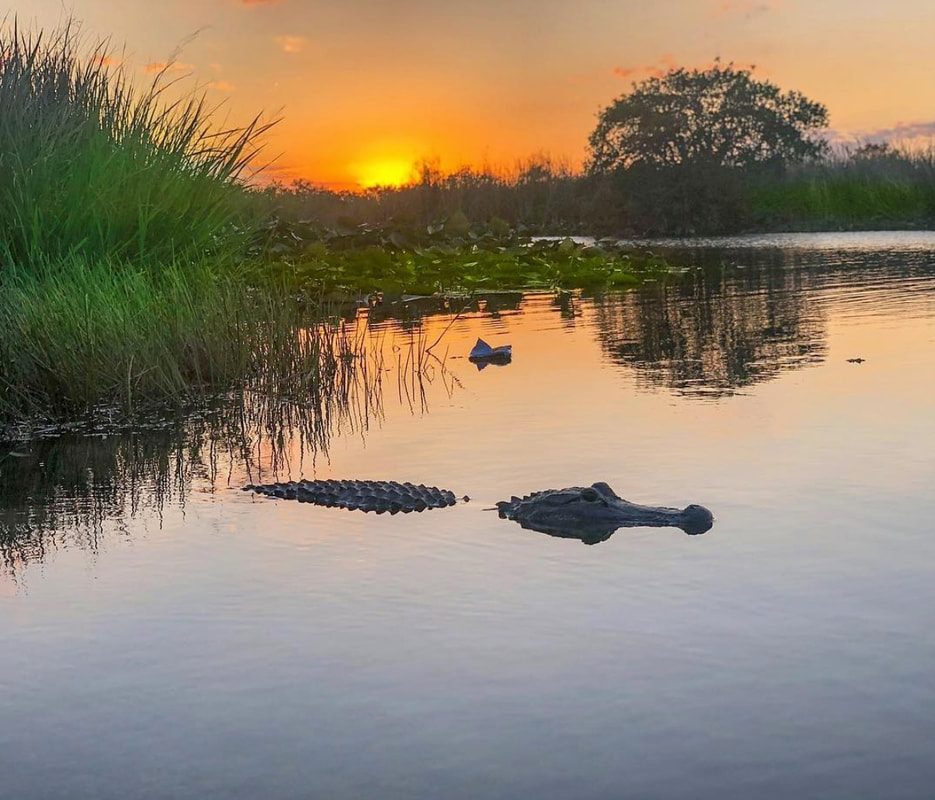
The Everglades is the sole place where American alligators and crocodiles coexist, alongside wading birds, manatees and rare panthers.
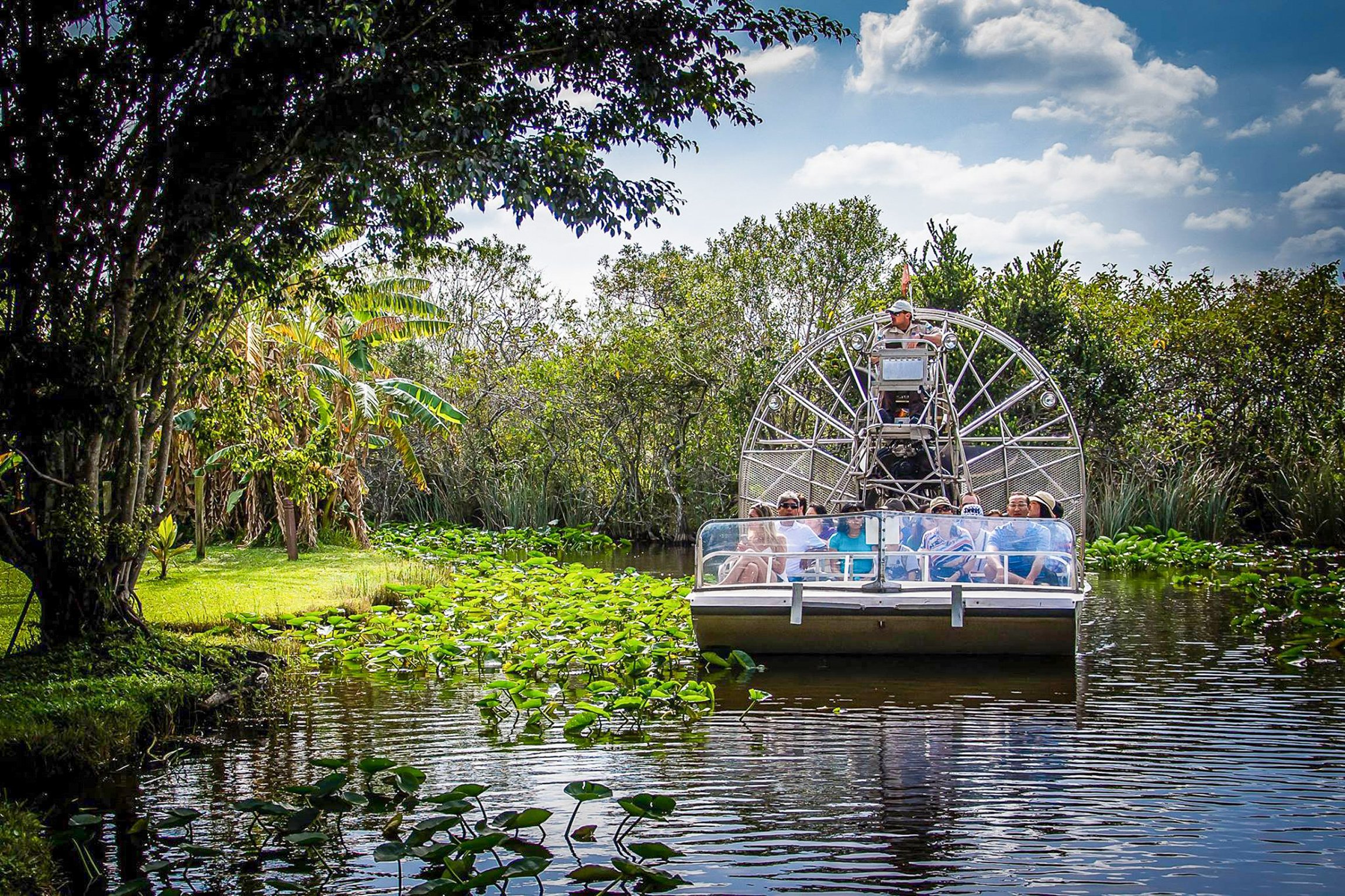
Airboats, kayaks, tram loops and fishing charters each open a different corner of the wetland, from open water to mangrove tunnels.
The Everglades reward how you choose to move through the water and sawgrass, not just where you go. This grid sorts the ways in: guided runs from major cities, airboats that skim the marsh, paddle routes through mangrove tunnels, elevated tram loops, and charter decks over the flats. Match the vehicle to what you want to encounter, whether that's alligators at close range, wading birds, quiet backwater, or a line in the water. Each page below points to one distinct way to experience the ecosystem.

Fishing Charter
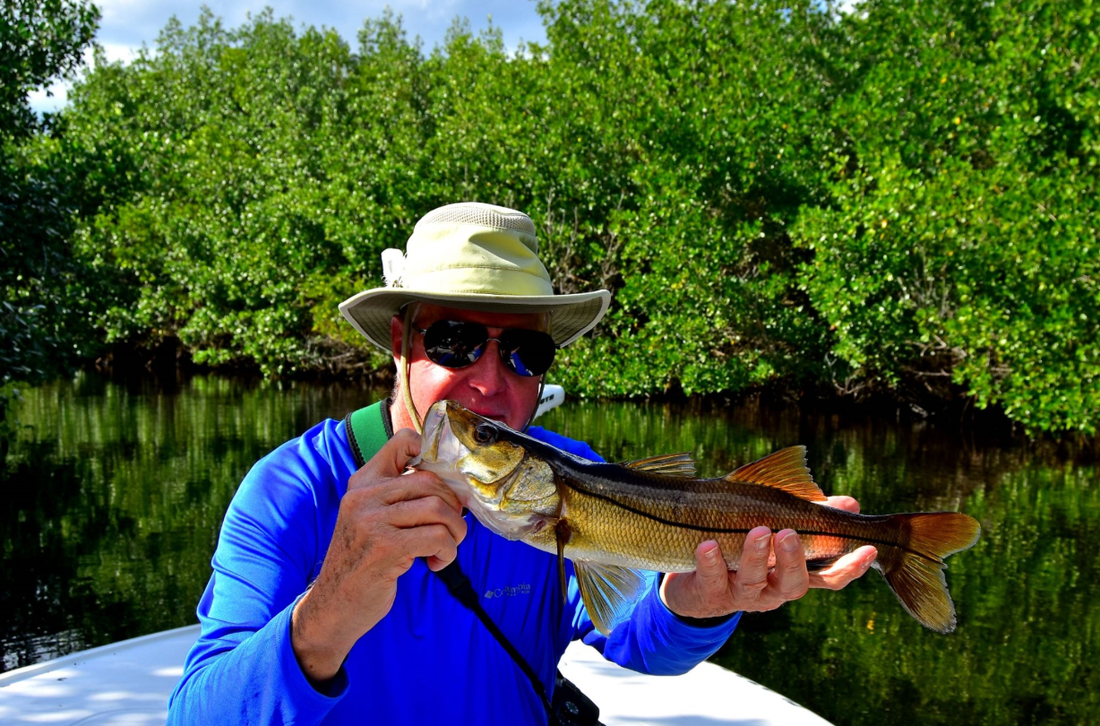
Cast for snook, tarpon, and redfish across shallow flats and backcountry channels with a guide who reads tides and knows where the fish stage.
Tram & Bike
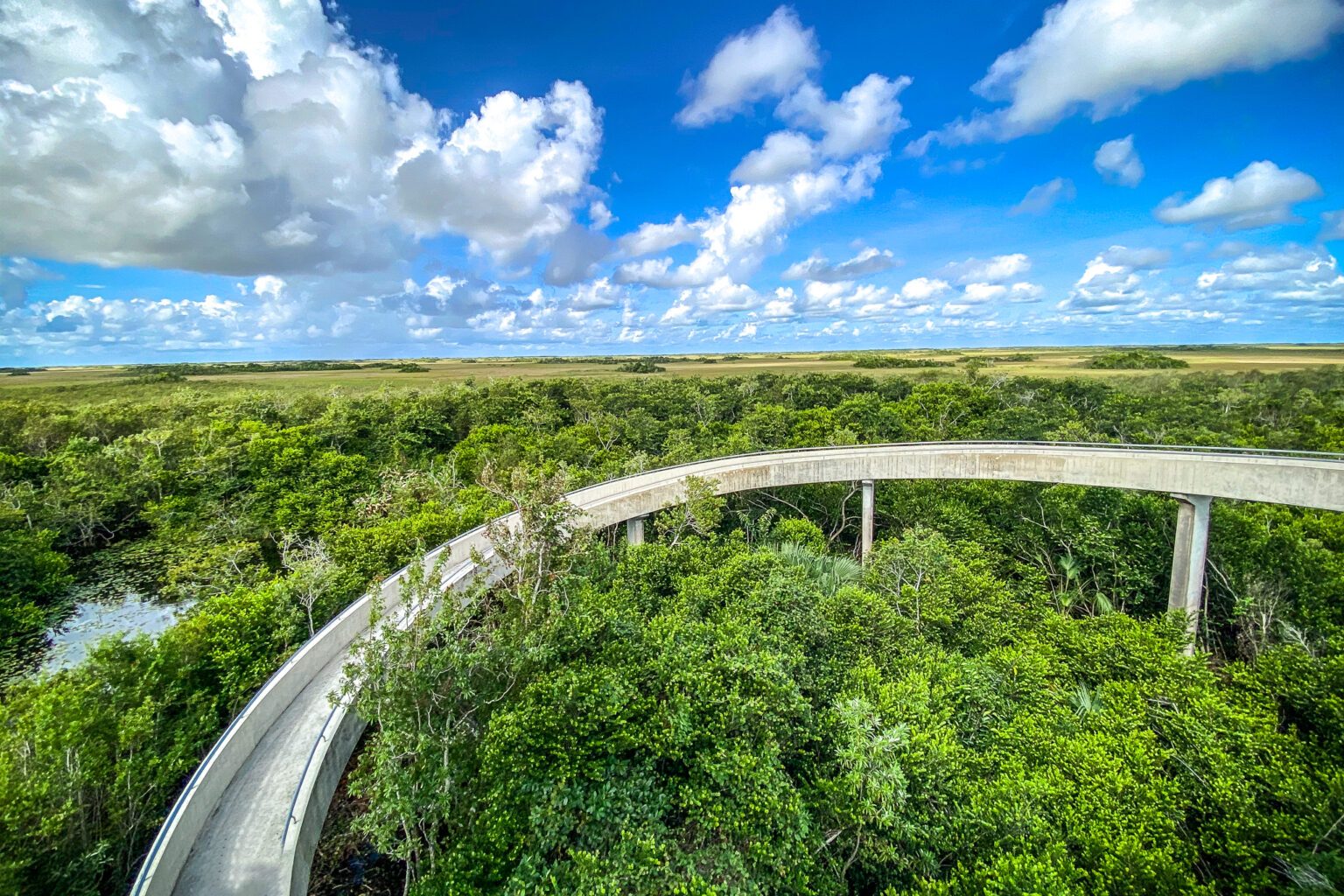
A 15-mile loop road with an observation tower, ridden by tram or bike, where alligators bask beside the path and the sawgrass prairie stretches flat to the horizon.
Wildlife Park
A single ticketed hub combining airboat rides with a reptile and wildlife exhibit, giving first-timers a structured introduction to Everglades species in one stop.
Paddling
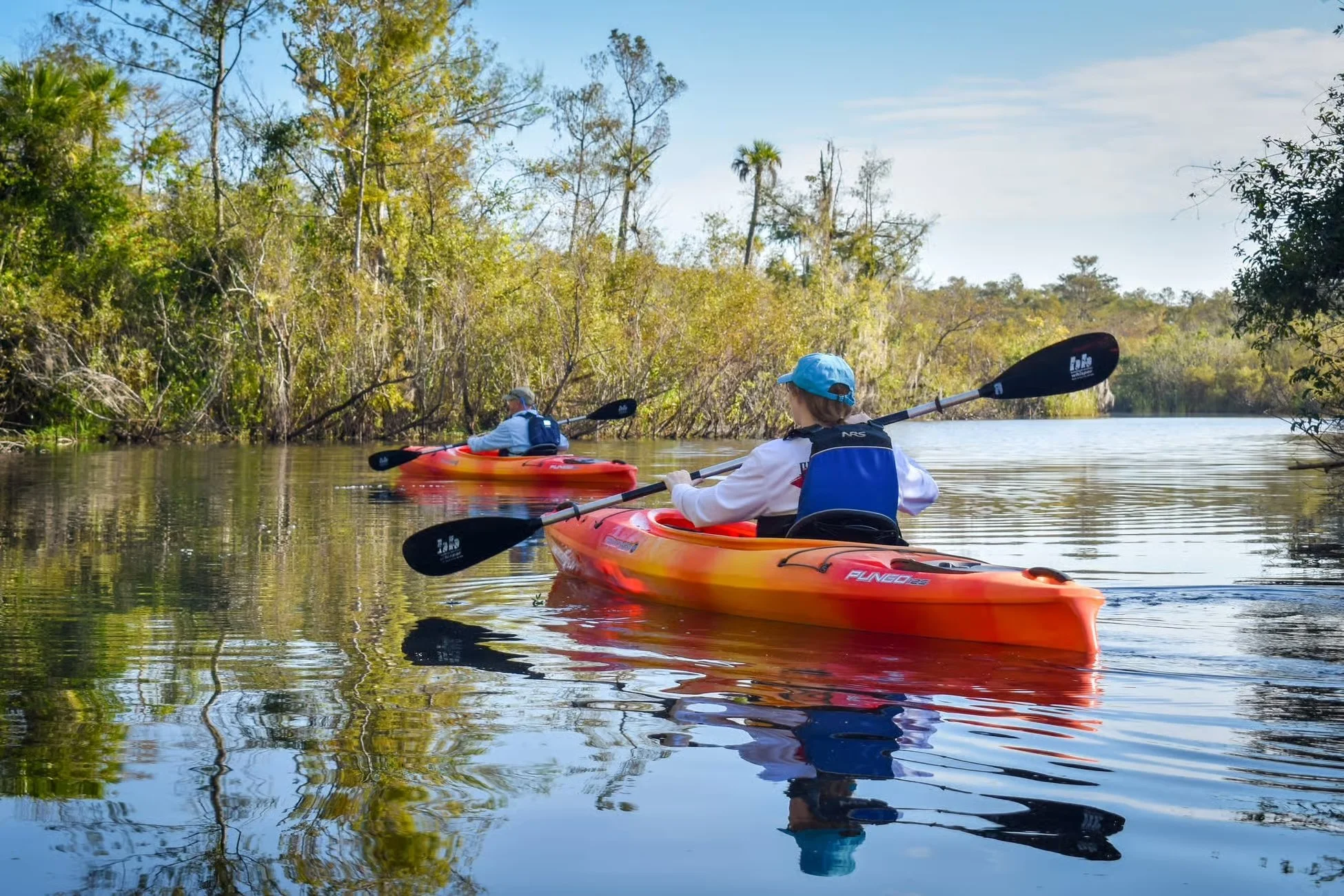
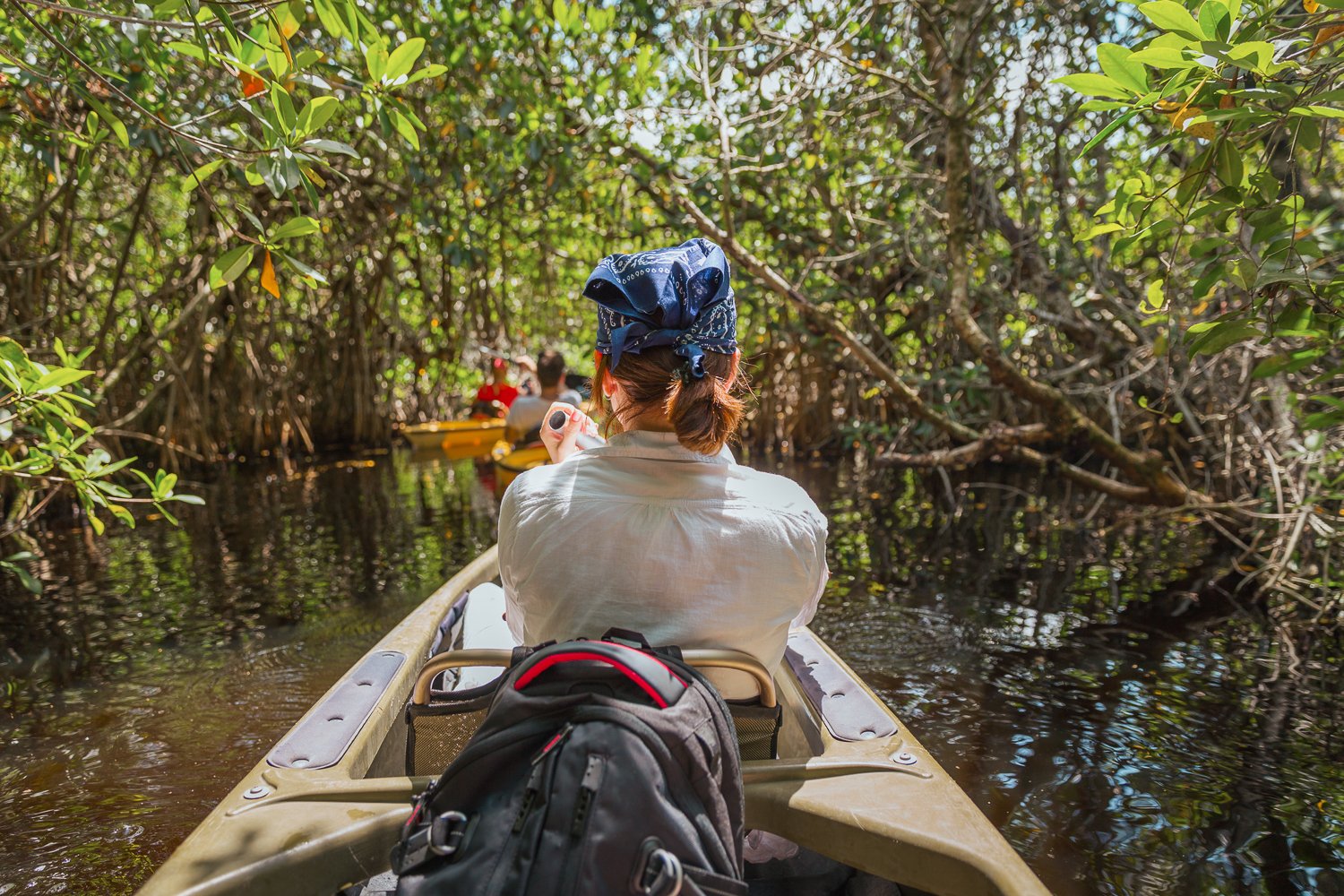
Paddle mangrove tunnels and open bays where motors can't follow, gliding past manatees, herons, and roots at eye level in near silence.
Airboat
After dark the marsh comes alive as spotlights catch alligator eyeshine and frog calls swell, an airboat run through a landscape that daytime visitors never witness.
Airboat
Charter a boat for your group alone, with a captain who tracks alligators, wading birds, and open sloughs at your pace rather than a fixed shared route.
Guided Tour
Long-haul day trips connecting central Florida to the wetlands, packaging the drive south with airboat rides and wildlife stops into a single booked outing.
Guided Tour
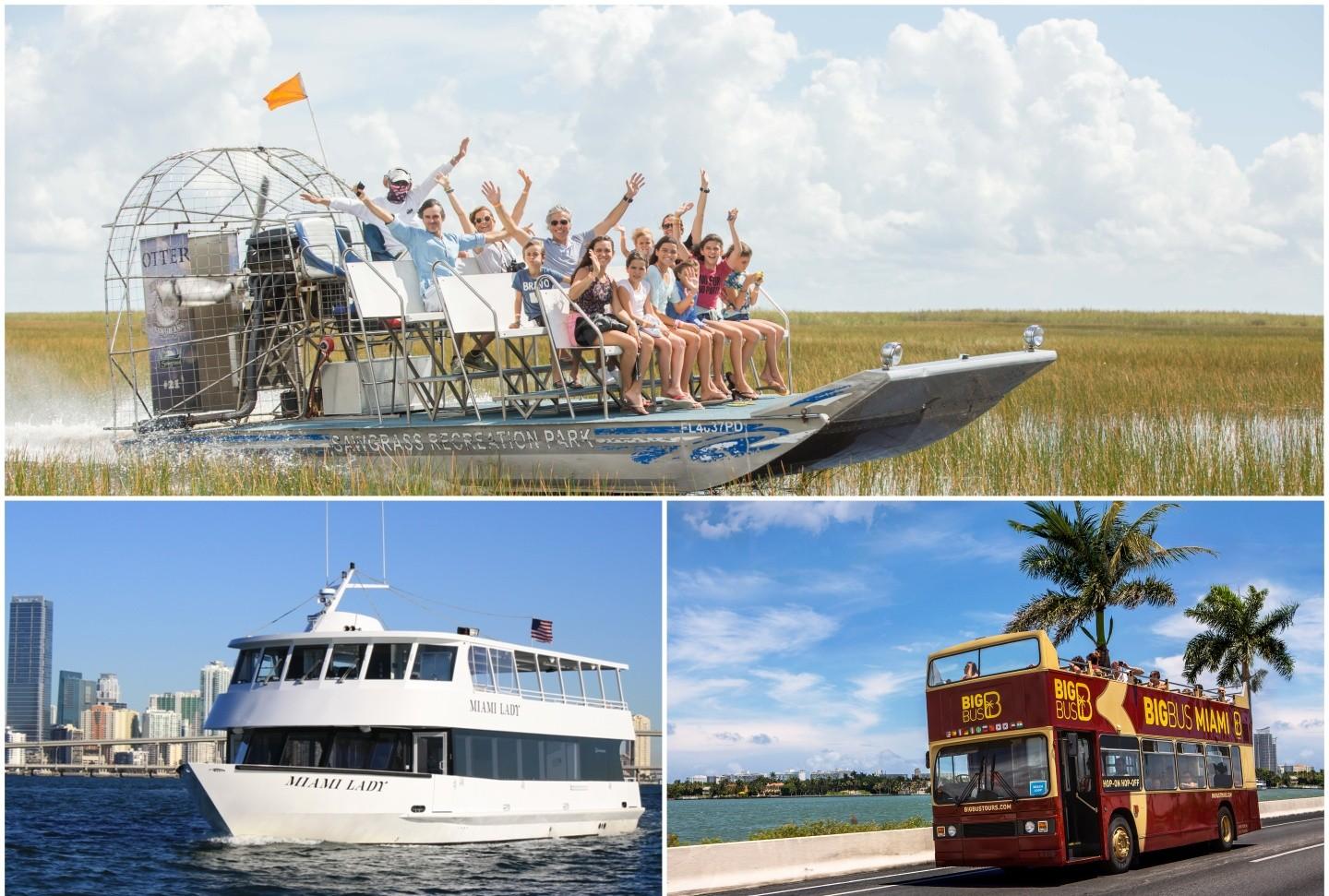
Guided departures pairing city pickup with airboat or tram time, built for travelers based in Miami who want the marsh without renting a car or navigating park entrances themselves.
The Everglades spans several entrances that don't connect by road, so these plans build by region rather than by clock. One day covers Shark Valley, a second adds the Homestead-to-Flamingo corridor, and a third reaches Everglades City for paddling. Each stop links to a bookable tour where one fits.
Skip the drive and let a guided run handle the logistics from the city out to the northern entrance, roughly a half-day commitment. Good option if you'd rather not rent a car for day one.
View guideRide the 15-mile paved loop by tram or rented bike, stopping at the observation tower for a wide marsh view. Allow two to three hours; alligators line the canal edges much of the year.
View guideBook a small-group airboat glide across open sawgrass for close sightlines and flexible timing. Sessions run about an hour on the water.
View guideHead back out after dark to catch alligator eyes reflecting under spotlight and the shift in marsh sounds. Bring a light layer.
View guideWalk the flat boardwalk over a slough for reliable close views of wading birds, turtles, and gators. The half-mile loop takes about 45 minutes.
Break up the drive south with the Pa-hay-okee overlook and a short pineland stroll. Ten minutes each; good leg-stretch stops between longer segments.
Reach the southern coast for the marina, manatee-watching, and views over Florida Bay. Pack water and snacks, since services are limited.
Paddle the mangrove tunnels and back bays around the Gulf Coast entrance with a guide who reads the tides. Half-day trips are common.
View guideCap the paddle with time along the boat basin watching for dolphins and shorebirds at the water's edge. A quiet close to the loop.
Everglades National Park has no internal road network connecting its three sections, so navigating it is really a matter of choosing which gateway matches your day's plan and driving there directly. All access is by car; there is no public transit inside the park itself.
The Homestead (Ernest F. Coe) entrance is the main gateway, roughly 40-50 miles and 1-1.5 hours from downtown Miami via the Florida Turnpike; it reaches Royal Palm, Anhinga Trail, Long Pine Key, and the road to Flamingo. Shark Valley, about 25 miles west of Miami via US-41/Tamiami Trail, is a 45-60 minute drive and centers on the tram loop road.
Everglades City (Gulf Coast entrance), the gateway nearest Naples, is reached via US-41 west then County Road 29, and serves boat-based access to the Ten Thousand Islands.
Miami-Dade Transit runs city buses as far as Homestead and Florida City, but no line continues into the park itself; visitors then need a rideshare, taxi, or private shuttle for the final leg to the entrance gate.
Uber and Lyft reach the entrances but drivers often cannot pick up return trips inside the park due to spotty cell coverage, so arrange return transport with your driver in advance or have a backup taxi number.
From the airport: From MIA, rental car or private transfer takes 45-60 minutes to Homestead/park entrance and costs $40-95; from FLL, the same trip runs 60-75 minutes and $95-150.
December through April is the window that works best for Everglades tours, when dry conditions concentrate wildlife around remaining water and mosquitoes are at their lowest. Ranger-led programs run a full schedule during these months, so arriving before 10am helps beat both the day's heat and the peak-season crowds at trailheads and boat launches.
Wildlife clusters at shrinking water sources and ranger talks run daily; arrive before 10am to get parking and beat tour groups.
Trails stay fully accessible and animal sightings remain strong, though this is the last stretch before wet-season closures reduce some tour options.
Afternoon thunderstorms roll in fast and mosquitoes increase sharply, but fewer visitors mean shorter waits for the tours still running.
Mosquitoes peak and some boat and trail routes see reduced schedules or closures, so tours are best planned for morning hours before storms build.
Costs here run close to the Florida statewide average: the park charge itself is modest, but guided tours and Homestead-area meals add up faster than the entrance fee suggests.
Daily budget: A realistic daily budget lands around $60-90 per person for a budget day covering entrance, one short tour, and simple meals, or $150-250 for a mid-range day that includes a longer airboat or fishing excursion.
Beyond the main park entrances, three protected areas make solid one-day add-ons for visitors based in the Homestead area, each showing a different side of South Florida's wetlands and coast.
Off-roading is permitted here unlike in the national park proper, with swamp buggy tours and backcountry ATV access through cypress strands and prairie alongside the Turner River paddling route.
Ninety-five percent water, this park centers on Biscayne Bay's coral reefs and shipwrecks, with snorkeling and boat tours run by the Biscayne National Park Institute out of the Dante Fascell Visitor Center.
An Audubon-run sanctuary near Naples with a 2.25-mile boardwalk through old-growth bald cypress, some trees over 500 years old, and a chance at spotting the rare ghost orchid in season.
Visitors who've done the standard airboat and tram routes can push further into Big Cypress National Preserve and Fakahatchee Strand, where the landscape shifts from sawgrass prairie to old-growth cypress swamp with a different set of species to spot.
Large-format black-and-white swamp photography displayed in a gallery built by Clyde and Niki Butcher on 13 acres behind the Oasis Visitor Center area; the property also runs guided swamp walks into the cypress behind the building.
A 24-mile gravel and dirt route (about 8 miles paved) that loops through cypress strand and sawgrass prairie past old settlements like Pinecrest, with a slow pace that suits alligator, otter, and wading-bird sightings; the Florida panther turns up here too, though rarely.
Known as the orchid capital of North America, the strand holds 44-plus native orchid species including the ghost orchid, alongside habitat for the Florida panther and Everglades mink; the Big Cypress Bend Boardwalk and Janes Scenic Drive offer access without a full swamp slog.
An 8.5-mile one-way canoe and kayak run from the Turner River launch through freshwater marsh, sawgrass prairie, and tight mangrove tunnels toward Chokoloskee, with alligators, wood storks, and herons along the way; narrow sections require breaking a kayak paddle in half to pole through.
Everglades touring works well with children once you match trail and tour choice to their age and stamina: paved boardwalks make wildlife viewing easy for toddlers and wheelchairs alike, while the standard tour formats split cleanly between low-key and high-energy.
The Anhinga Trail near Royal Palm Visitor Center is paved and boardwalk the entire 0.8-mile loop, flat and stroller- and wheelchair-friendly, though summer offers little shade. The Shark Valley loop road is also paved and flat, workable for jogging strollers if you're walking rather than biking it.
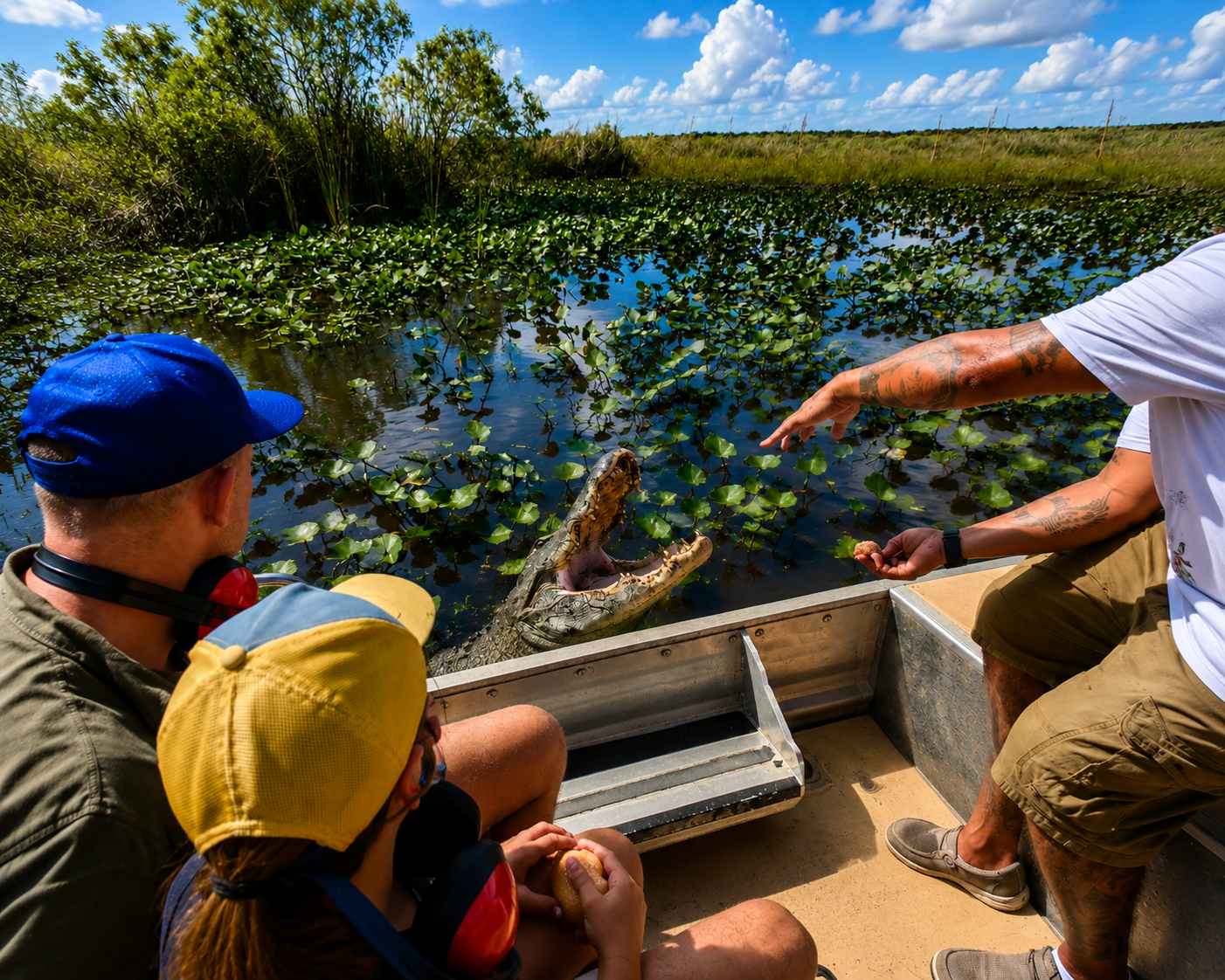
Shark Valley's two-hour tram tour suits most ages since kids stay seated and shaded, with a stop to climb the observation tower; airboat rides run shorter and louder, better for kids old enough to keep hands inside the boat and wear hearing protection comfortably.
Mosquitoes can be persistent on boardwalks even outside peak dry season, so pack repellent and light long sleeves; sun exposure is the bigger risk on open trails and tram routes, so sunscreen and hats matter more than shade-seeking.
Airboat operators near the Tamiami Trail entrance generally welcome young children, with some offering discounted rides for ages 6-11 and free rides under 6, but very young kids may find the noise and speed unsettling compared with the tram.
Royal Palm Visitor Center has restrooms and a small store, useful for diaper changes or a break before or after the Anhinga Trail; Shark Valley's midpoint observation tower offers a similar pause with shade and water access on the tram route.
Everything you need to know about visiting Everglades Tours
Most visitors comfortably cover the highlights in one full day, though two to three days allow time for both a sunrise boardwalk walk and an afternoon boat excursion. A single day is enough for a taste of the ecosystem, but travelers who want to pair Everglades Tours with nearby Florida Keys or Big Cypress detours should plan for at least two nights in the Homestead area. Those short on time can still see alligators, wading birds, and sawgrass prairie on a half-day tour.
December through April is the dry season, when wildlife concentrates near shrinking waterholes, trails stay fully accessible, and mosquitoes are minimal, making it the preferred window for Everglades Tours. Detailed seasonal planning, including wet-season tradeoffs, is covered in the dedicated best-time-to-visit guide. Booking a few weeks ahead during these winter and early spring months is wise since tour slots fill quickly.
Miami International Airport (MIA) is the closer gateway, with a rental car or private transfer taking 45 to 60 minutes and costing $40-95 to reach Homestead or the park entrance. Fort Lauderdale-Hollywood International (FLL) is a further option, with transfers running 60-75 minutes and $95-150 to the same area. Full transfer logistics and route options are detailed in the getting-around section.
There is no public transit within the park itself, so a rental car or organized shuttle is essential for reaching trailheads and marinas. The nearest city bus service, Miami-Dade Transit, charges a $2.25 fare but only serves surrounding towns, not the park interior. Renting a car remains the most practical way to link multiple Everglades Tours in a single day.
A mid-range meal near the park runs $15-25, coffee averages around $4.00, and a local draft beer in Homestead or Florida City costs $6-8. There are no metered taxis inside the park, but nearby rides in Homestead or Florida City run $2.50-3.00 per mile. A full cost breakdown for planning a multi-day trip lives in the dedicated budget guide.
There is no citywide transit pass valid inside the park, so savings come mainly from bundling activities rather than a metro card. Booking skip-the-line Everglades Tours in advance can reduce wait times at popular boat launches during peak winter months. Full pricing tiers and money-saving bundles are covered in the budget section.
Guided Everglades Tours are considered safe when led by licensed operators who understand alligator behavior, weather patterns, and trail conditions. Visitors should stay on marked boardwalks, keep a safe distance from wildlife, and follow ranger guidance, especially during summer storms. Traveling with an experienced guide is the simplest way to avoid the park's few genuine hazards, like heat exposure and sudden thunderstorms.
Tipping guides on Everglades Tours is customary and appreciated, generally in the range travelers would offer any U.S. tour guide, though it is not mandatory. Casual dress and sun protection are the norm rather than any strict etiquette code. Being punctual for boat and airboat departure times is one of the few firm local expectations.
The Everglades is famous as the largest subtropical wilderness in the United States, known for its sawgrass marshes, mangrove forests, and dense alligator population. It is also recognized for rare wading birds and its role as a globally significant wetland ecosystem. Many visitors come specifically for the chance to see alligators and birdlife up close on a guided boat trip.
Homestead and Florida City are the most practical bases, sitting closest to the main park entrance and offering easy access to restaurants and tour operators. Staying in this area cuts down on early-morning drive time before sunrise wildlife viewing. Miami itself works as an alternative base for travelers who want to combine city landmarks with day trips into the park.
Choose from amazing attractions and create unforgettable memories in this beautiful city
View All Attractions